
You found the house. Negotiated the offer. Started planning the move.
Then someone mentions a change to the appraisal process.
Before you start worrying about your closing, let’s explain what’s happening—and what you can do to prepare.
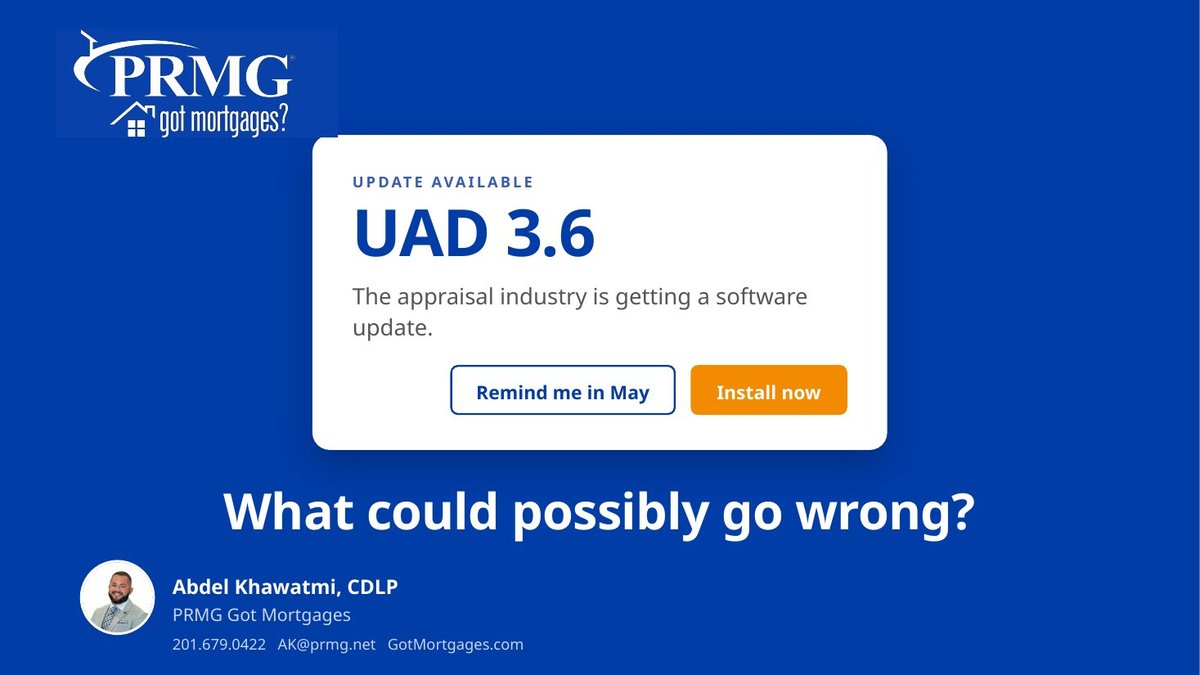
UAD 3.6 is changing how appraisers collect, organize, and report property information. For buyers, sellers, and real estate agents, the practical takeaway is simple: prepare property details early, confirm appraisal timelines, and keep communication moving.
At Got Mortgages, we believe understanding the process helps you make better decisions. Here’s what you need to know.
Want the visual walkthrough?
Our presentation explains the changes, key dates, common misconceptions, and steps to prepare.
What is UAD 3.6?
UAD stands for Uniform Appraisal Dataset.
Fannie Mae and Freddie Mac redesigned the appraisal reporting standard to create more consistent property information and a report that adapts to the home being appraised.
Think about the difference between a condominium, a two-family property, and a waterfront home with a detached guesthouse. Each presents different questions.
The redesigned report responds to those differences, displaying information relevant to the property’s characteristics.
Source: Fannie Mae — Uniform Appraisal Dataset
In everyday terms: the report should tell a clearer, more detailed story about the property.
What could change during your transaction?
The biggest adjustment happens behind the scenes as appraisers, lenders, and appraisal management companies adopt new software and workflows.
For your transaction, that means planning for:
- More detailed property questions. Renovations, additional living areas, outbuildings, and unusual features may require clarification.
- Additional documentation. Having relevant permits, improvement records, and property information available can help resolve questions.
- Different turnaround times. Availability, property complexity, and the provider’s readiness can affect scheduling and review.
- Property-specific pricing. Confirm the appraisal fee for your transaction rather than relying on what someone paid on another home.
A longer report does not automatically mean something is wrong. More questions do not automatically mean your loan is in trouble.
They do mean that preparation matters.
When does UAD 3.6 take effect?
For appraisal submissions covered by the Fannie Mae and Freddie Mac transition, these are the key dates:
| Date | What it means |
|---|---|
| November 2, 2026 | UAD 3.6 becomes required for new appraisal submissions, unless the applicable lender has an approved policy exception. |
| May 20, 2027 | All new submissions must use UAD 3.6, including those from lenders using the temporary exception. |
| June 28, 2027 | The older UAD 2.6 format retires, including resubmissions of previously submitted reports. |
The temporary exception does not move the November mandate for everyone. Individual lenders also have their own implementation schedules.
Sources: Fannie Mae — UAD 3.6 transition timeline and Fannie Mae — UAD 3.6 implementation update
The key trigger is the appraisal’s submission to the Uniform Collateral Data Portal, rather than simply the date you signed a contract or ordered the appraisal. Ask your lender which requirements apply to your file.
Source: Fannie Mae — Uniform Collateral Data Portal FAQs
Will this make my home appraise lower?
UAD 3.6 does not direct appraisers to lower property values.
The appraiser still develops an opinion of value based on the property, relevant market evidence, and applicable appraisal requirements.
More detailed reporting can make differences between homes easier to understand. Two properties with the same bedroom count and square footage can still differ significantly in condition, layout, improvements, and location.
The goal is better information supporting the analysis. A new reporting format alone does not determine the result.
Is artificial intelligence replacing the appraiser?
No. UAD 3.6 is a data and reporting standard.
Software may help organize information, support measurements, or flag inconsistencies. The appraiser remains responsible for the appraisal analysis and opinion of value.
A technology flag also does not automatically create a repair requirement. The underlying issue and applicable lending requirements still need to be evaluated.
Your five-step pre-appraisal checklist
1. Share unusual features early.
Tell your lending team about accessory dwelling units, converted garages, mixed uses, multiple structures, or other features that may need additional review.
2. Gather improvement records.
Have a straightforward list of significant renovations, approximate completion dates, and available supporting documents. Share what you know accurately.
3. Arrange access.
Coordinate access to the areas and structures the appraiser needs to inspect. Confirm any special arrangements beforehand.
4. Document known conditions.
If a leak was repaired or a major system replaced, gather available records. Saying “it was handled” may leave questions unanswered.
5. Confirm timing before making promises.
Ask about scheduling, expected delivery, and time for lender review. A contract deadline does not create additional appraiser capacity.
Why this matters for New Jersey properties
From waterfront homes in Ocean County to condominiums and older homes throughout Monmouth County, property details deserve attention.
For example, “waterfront” is only the starting point. A water view, direct access, a dock, and documented dock rights are different facts.
The same goes for a “finished garage” or “in-law suite.” Describe what exists and provide available documentation rather than assuming how it will be classified.
Clear facts help everyone ask better questions earlier.
Get prepared before the appraisal becomes urgent
You do not need to become an appraisal expert to buy, sell, or refinance a home. You need a team that explains the changes and helps you prepare.
At PRMG Got Mortgages, we help buyers, homeowners, and real estate partners work through the financing questions that affect their next move.
Have a property with unusual features? Working against a tight closing schedule? Unsure how this transition affects your transaction?
Bring me the situation. Let’s work through the options.
Download the UAD 3.6 Appraisal Guide
Connect with our team before your next transaction: Build My Mortgage Plan or contact us.
Abdel Khawatmi, CDLP
PRMG Got Mortgages
Call: 201.679.0422
Email: AK@prmg.net
Visit: GotMortgages.com
Educational information as of October 21, 2026. Requirements, fees, and timelines vary by loan program, lender, and property. Abdel Khawatmi NMLS #1712023 | PRMG NMLS #75243 | Equal Housing Opportunity.