
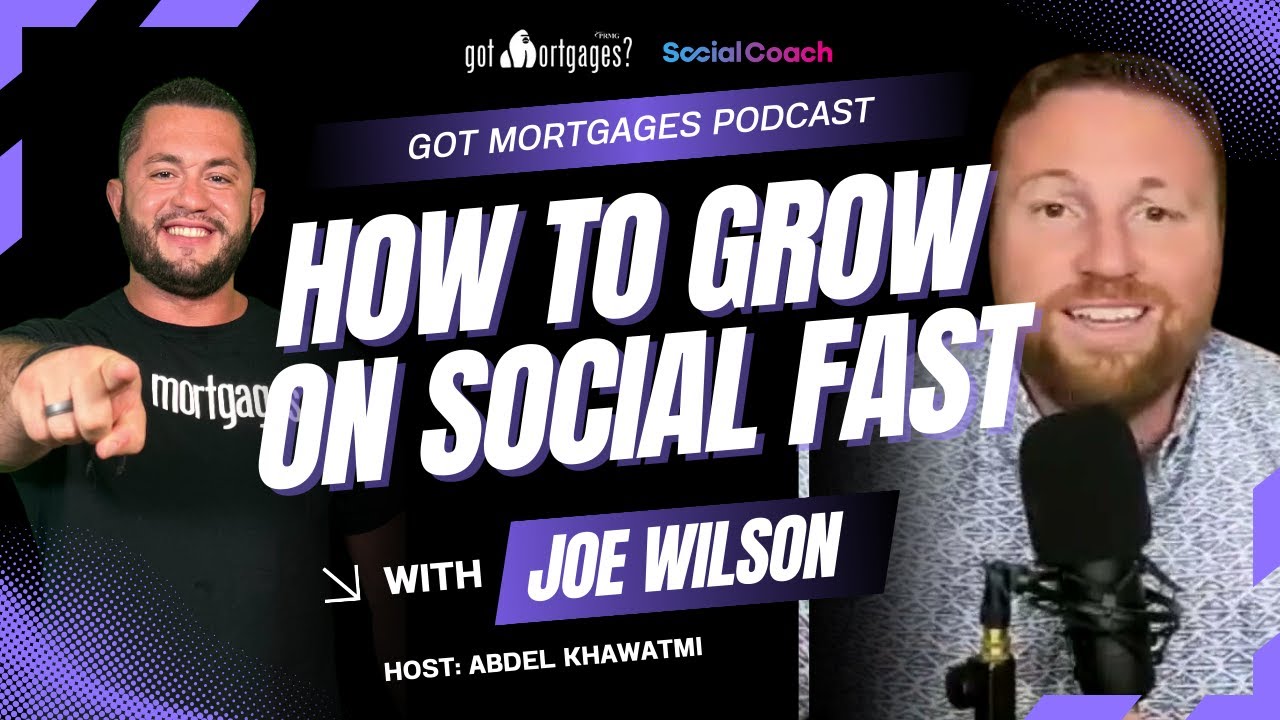
Mortgage social media works best when it makes a professional recognizable, useful, and approachable—not simply visible. On Got Mortgages Podcast, Social Coach founder Joe Wilson joins Abdel Khawatmi to explain why generic education, polished appearances, and automated scripts can fall short. Their conversation points toward a more practical approach: give people a reason to remember you, put referral partners in the spotlight, and use video to demonstrate how you think. It explores the habits that can turn a social presence into a stronger foundation for real conversations.
Conversation originally published February 19, 2025. Recap added October 24, 2026.
Watch the original conversation on YouTube.
Key Takeaways: Recognition Before the Sales Pitch
Joe’s central argument is that being a trusted adviser is necessary but not distinctive on its own. Many mortgage professionals publish educational content. The harder question is why someone would remember one particular loan officer when a financing question arises. Personality, a recognizable presentation, and useful explanations need to work together.
The episode’s most actionable lessons are to create for prospective customers rather than industry applause, support referral partners with specific attention, and start making videos before you feel fully comfortable. Scripts and teleprompters can remove friction, but they should help reveal your judgment rather than replace it.
AI fits into that same supporting role. It can help organize a thought or improve an opening, but a broad request for mortgage topics is unlikely to produce a distinctive voice. The raw material should come from questions you actually answer, lessons you genuinely learned, and concerns your audience recognizes.
Build a Recognizable Brand, Not Just an Educational Feed
Joe describes a familiar frustration from his time as a loan officer: someone in your own circle forgets that you do mortgages. That is a recognition problem, not necessarily a knowledge problem. Posting accurate information does not automatically establish a strong connection between your identity and the service you provide.
Abdel’s approach offers a concrete example. He discusses branded clothing, consistent Got Mortgages presentation, and personalized closing shirts. These details give his public presence continuity beyond a single educational post. Joe also emphasizes community and personal interests as ways to make a professional easier to connect with.
The practical application is to choose a few recognizable elements you can sustain. That might mean a consistent visual identity, a clear local perspective, and a conversational way of explaining financing. You do not need to invent a character or share your entire private life. You need enough consistency that a viewer recognizes both the person and the professional purpose.
Education still matters. Abdel describes making educational content a planned part of his routine. The distinction is that education establishes competence while personal presentation makes that competence easier to remember. Neither needs to crowd out the other.
Make Referral Partners the Subject, Not the Target
Joe challenges the familiar prospecting approach of asking agents to meet for coffee before giving them a compelling reason to engage. In his framing, referral relationship content should start with the other professional’s work and interests, not with the loan officer’s desire for business.
His specific example is a reaction video built around an agent’s listing or existing post. Rather than publishing another broad introduction to your lending services, highlight something genuinely interesting about the property. The point is to demonstrate attention and make the agent’s work the focus.
A sensible application is to coordinate with the agent before reusing listing media, agree on the feature worth discussing, and give clear credit. Explain why that feature matters to a potential buyer instead of adding a generic compliment. This turns a vague offer to help with marketing into a concrete contribution.
Joe also asks a useful editorial question: would you follow your own account? A feed that constantly requests attention without providing interest is a weak relationship tool. Being helpful, personable, or occasionally funny gives partners a reason to engage before there is a transaction to discuss.
Use a Connected Workflow to Remove Video Friction
Joe describes Social Coach as a platform built to help lenders improve social media activity while also supporting organizational oversight and compliance needs. At the individual level, he discusses content ideas, customization of company material, scripting, a teleprompter, editing services, and posting to social accounts.
Abdel’s response centers on the practical cost of juggling tools. Moving an idea from an AI assistant to a separate teleprompter and then into editing creates several opportunities to stop. His enthusiasm is less about having more technology than about reducing the steps between deciding to make a video and publishing it.
For a mortgage team, the useful lesson is to map the workflow before buying another tool. Identify where people stall: choosing topics, writing openings, recording, editing, obtaining approval, or posting. A connected process is valuable when it addresses those actual bottlenecks.
Software support should also be distinguished from editorial responsibility. A workable team process still needs someone to check mortgage claims, required disclosures, permissions, and the final presentation. The episode describes workflow capabilities, not a substitute for a lender’s own review requirements.
Treat Early Videos as Practice, Not a Verdict
Joe’s advice for camera hesitation is deliberately direct: shift attention away from how you look and toward the person your explanation could help. He calls his practice approach the first 10 rule, meaning that beginners should expect early attempts to feel awkward rather than treating awkwardness as evidence they cannot do video.
That is a practice framework, not a prediction about views or a promise that confidence arrives on a particular recording. Its value is in setting a manageable starting commitment. A professional can complete a small series, notice what becomes easier, and improve one element at a time.
Abdel describes his own progression from highly formal, suited presentations toward a more natural branded appearance. Joe notes that this is still professional. The choice is not between a polished studio and carelessness; it is between a presentation you can sustain comfortably and one that makes every recording feel like a performance.
Start with one question you can answer clearly. Use a short outline or teleprompter if it helps, record in a quiet stationary setting, and check the explanation before posting. Judge the first batch by clarity, accuracy, and completion rather than whether every sentence sounds effortless.
Let Empathy Shape the Message Before You Record
The conversation moves beyond presentation into the way professionals respond to buyer uncertainty. Abdel emphasizes that a hesitant buyer should not be pushed simply because everyone wants the transaction to proceed. That principle matters for marketing because viewers are assessing not only what you know, but also how you might treat them under pressure.
A useful content application is to address uncertainty without belittling it. A video can explain the difference between a financing question, a property-condition concern, and a decision about whether a home is the right fit. Those are related issues, but they do not all call for the same answer or the same professional.
This is also where personal branding becomes substantive. Saying you care about customers is easy. Explaining a difficult choice calmly, acknowledging what remains unknown, and pointing people toward the appropriate next conversation demonstrates the behavior behind that claim. Empathy becomes visible through the explanation rather than through a slogan.
Choose Buyer Relevance Over Industry Applause
One of Joe’s strongest criticisms is aimed at content designed to impress colleagues rather than help homebuyers. Jokes about difficult borrowers or the frustrations of transaction work may attract industry attention while making a prospective customer less comfortable asking a basic question.
He distinguishes that approach from content created for recruiting or building an industry-facing audience. The intended audience changes the strategy. An active practitioner seeking buyer conversations should not automatically copy the tone of an account whose primary purpose is attracting other professionals.
Before publishing, name the intended viewer and the useful outcome. Does the post help a buyer understand a decision? Does it help an agent communicate more clearly? Or does it mainly invite peers to recognize an inside joke? This simple review can prevent engagement from becoming detached from the business objective.
Joe’s related criticism is being professional instead of interesting. He is not advocating careless claims or antagonism. Both speakers draw boundaries around divisive discussion. The opportunity is to express a clear, human point of view without treating provocation as a substitute for expertise.
Write a Strong Hook Without Manufacturing Alarm
Joe recommends moving beyond predictable lists of tips toward openings with a stronger point of view. His discussion of opinion-led or rant-style content is fundamentally about framing: the same educational subject can become more engaging when the opening identifies a tension that matters to the viewer.
Abdel recognizes the weakness of spending the beginning of every video on a familiar greeting and self-introduction. An opening that immediately addresses the viewer’s concern gives someone a reason to keep watching before they know who is speaking.
For practical use, replace a broad introduction with a specific distinction you can support. An editorial example would be: A payment estimate is not the same as a complete homebuying budget. That opening creates a reason to explain the missing pieces without claiming a crisis or attacking another professional.
The rest of the video must fulfill the opening. If the hook promises a surprising mistake, identify the mistake and explain a constructive next step. Attention gained through exaggeration can undermine the trust the content was supposed to build.
Use AI to Sharpen Your Experience, Not Invent It
Joe’s warning about AI is aimed at minimal-input content production. Asking for a list of mortgage topics can lead to the same broad explanations everyone else receives. The result may be fluent but interchangeable, with little evidence of the professional’s own thinking.
He recommends using real experience, including lessons from mistakes, as the starting point. The important distinction is that a story should reveal judgment: what assumption proved wrong, what you learned, and how you now explain the issue. It should not expose a customer’s private circumstances.
A stronger workflow is to write down an anonymized lesson yourself, remove identifying and confidential details, and then ask AI for several clear openings or a shorter structure. Review the output for invented facts, overstatement, and wording you would never naturally use.
Abdel still supports scripts and teleprompters for beginners. That is consistent with Joe’s criticism: assistance is useful when it helps someone communicate, not when it replaces their contribution. Use the draft as scaffolding, then revise until the explanation sounds like something you could say in a real conversation.
Final Checklist: Turn the Discussion Into a Publishing Routine
Define the audience and purpose first. Choose whether the next post serves a buyer, an existing contact, or a referral partner. Write down the question it answers and the conversation you hope it makes easier.
Select one recognizable brand element and one useful idea. Prepare a direct opening, a short explanation, and an appropriate next step. If featuring another professional’s content, coordinate permissions and attribution before recording.
Reduce the production burden. Use a familiar location, an outline or teleprompter if needed, and a clear review path. For your first batch, prioritize completing accurate, understandable videos over creating a sophisticated visual production.
Finally, review response quality as well as activity. Applying the episode’s relationship-first approach, note substantive questions, partner replies, and relevant conversations—not just views. Use those signals to choose the next topic while keeping the core promise consistent: useful mortgage guidance from a recognizable human being.
Frequently asked questions
What did Joe Wilson say Social Coach helps loan officers do?
He described support for content ideas, customization of company content, scripting, teleprompter-assisted recording, editing, and social posting. He also discussed lender-level oversight and compliance needs.
How can a loan officer become more memorable without sharing private life details?
Use consistent branding, a recognizable speaking style, and a clear professional or community perspective. Abdel’s branded clothing is one example from the discussion. Personal connection does not require sharing family information or confidential customer stories.
What is a practical social media idea for strengthening an agent relationship?
Joe suggests reacting to an agent’s listing content and highlighting a distinctive property feature. Coordinate use of the media, credit the agent, and explain why the feature matters to buyers. Keep the agent’s work central rather than turning the post into a lending sales pitch.
What is Joe Wilson’s first 10 rule for mortgage videos?
It is his way of encouraging beginners to accept that early recordings will feel awkward and continue practicing. Treat the first 10 videos as a manageable learning commitment, not a guaranteed threshold for confidence, audience growth, or leads.
Should a new loan officer use a script or teleprompter?
Both speakers support using those tools to get started. Prepare a short explanation, check its accuracy, and rewrite language that feels unnatural. The goal is to communicate clearly, not to perform a script word for word at the expense of understanding.
Why can mortgage industry humor attract the wrong audience?
Inside jokes may appeal mainly to colleagues, while jokes at borrowers’ expense can discourage prospective customers from asking questions. Joe recommends matching content to the intended audience and distinguishing buyer-focused marketing from recruiting or industry-facing content.
How can mortgage professionals write stronger video hooks responsibly?
Open with a specific buyer concern, misconception, or useful distinction instead of a lengthy greeting. For example, explain why a payment estimate is different from a complete buying budget. Deliver on the opening with accurate guidance rather than exaggerated urgency.
How should loan officers use AI without making their content generic?
Start with your own question, observation, or anonymized lesson, then use AI to improve structure or propose openings. Remove confidential information before using a tool, verify every claim, and revise the result into language you would actually use with a customer.
To talk with PRMG Got Mortgages, call 973-536-0276, visit GotMortgages.com, contact the team or build your mortgage plan.
Explore more Got Mortgages Insights and Abdel Khawatmi’s profile. Explore more conversations at the Got Mortgages Podcast website.
Author: Abdel Khawatmi with PRMG Got Mortgages | 973-536-0276
This article is general mortgage information only. It is not a commitment to lend, a rate quote, or legal or tax advice. Loan approval, terms and pricing depend on a full application, credit review and property details, and market conditions change. Talk with a licensed loan officer and your own legal or tax professional about your situation. NMLS #1712023 | PRMG NMLS #75243.