
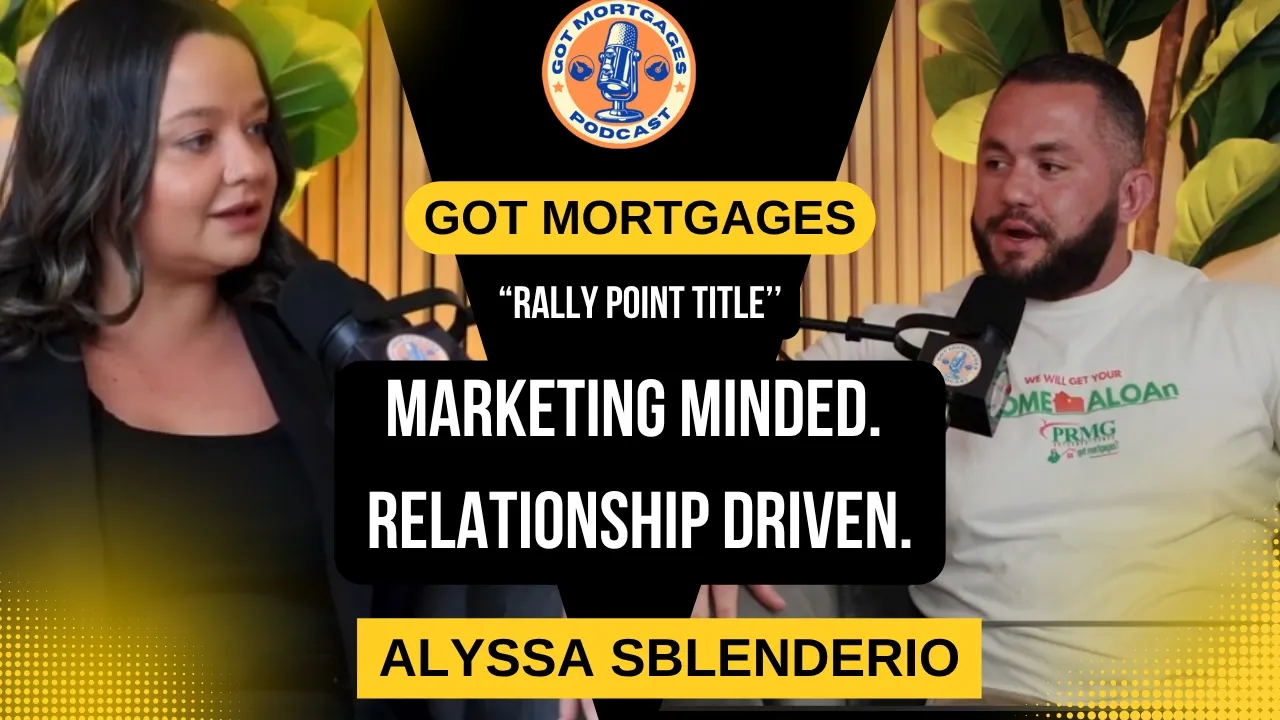
A title business can earn attention through networking, but lasting relationships depend on useful help, consistent contact and reliable execution. That is the central lesson of this Got Mortgages Podcast conversation between Abdel Khawatmi and Alyssa from Rally Point Title. Alyssa describes how experience in marketing, real estate and mortgage business development shaped her approach: help referral partners become more visible before they have a transaction, build familiarity through genuine conversations, and remain a dependable contact when business arrives. The discussion also touches on why buyers have the right to select their title company and how 1031 exchanges can support qualifying real estate investors.
Conversation originally published May 13, 2026. Recap added October 24, 2026.
Watch the original conversation on YouTube.
Key Takeaways: Useful Help Comes Before the Referral
Alyssa’s approach begins earlier than closing day. Rather than compete only on the experience at the settlement table, she looks at what real estate agents need to attract clients in the first place. Basic online visibility, an understandable professional identity and practical marketing help create opportunities to demonstrate usefulness before an order exists.
Repeated contact matters, but attendance alone is not the strategy. Abdel and Alyssa emphasize meaningful conversations, familiar professional circles and an eventual direct request to work together. Their own relationship developed through recurring networking encounters before a conversation about doing business.
For consumers, the practical takeaway is to participate in selecting the professionals around a transaction. Ask which title services you can shop for and how providers will coordinate. For investors, title work and a possible 1031 exchange should be planned together, while recognizing that exchange eligibility and handling of funds require specialized guidance.
A Marketing Background That Helps Explain Partner Needs
Alyssa started as a receptionist at a marketing company and worked her way into managing an office supporting direct-mail advertising sales. As digital advertising developed alongside the mailing business, her responsibilities expanded into business profile pages and search visibility. Her experience involved both getting a local business noticed and supporting the people responsible for selling the advertising.
She later moved into real estate marketing, then mortgage business development, before joining Rally Point Title. A professional connection made while coordinating title orders helped lead to that opportunity. The sequence illustrates something important about industry relationships: people can become familiar with your work in one role and later become a bridge to another.
That cross-industry experience helps her understand a referral partner’s pressures. An agent needs listing and buyer opportunities. A lender needs an organized path toward closing. A title team has its own responsibilities within that process. Understanding those different needs makes a business-development conversation more relevant than a general request for orders.
For a professional building a similar role, the application is to map the partner’s work before proposing help. Ask what happens before the referral, where clients get confused and which recurring tasks consume time. An offer tied to one of those problems is more useful than a presentation centered entirely on your company.
Why Basic Online Visibility Is a Practical Starting Point
Alyssa identifies a gap in the help offered to agents: the basics can be overlooked. There may be plenty of discussion about delivering an impressive closing, but an agent first needs people to discover and recognize the business. She connects her marketing experience to assistance with Google Business Profiles and other online foundations.
This shifts the initial conversation away from asking for a transaction and toward identifying a manageable problem. An agent may have professional knowledge but an incomplete online presence. Helping that person understand what prospective clients see can create a useful working relationship without requiring an elaborate campaign.
A practical application is to review the public-facing essentials together: accurate contact information, a clear explanation of services, an appropriate service area and a working route to make an inquiry. Any Google Business Profile work should follow platform eligibility and representation rules; not every proposed profile or location arrangement is appropriate.
The business logic is straightforward, but the outcome is not automatic. Better visibility can make a professional easier to find and evaluate. Whether that produces inquiries depends on relevance, competition, credibility and follow-through. Help should stand on its own value, not be presented as something that obligates the recipient to send title business.
Networking Works When Familiarity Leads to a Real Conversation
Abdel and Alyssa’s account of meeting is more instructive than a generic recommendation to network. They saw one another repeatedly before explicitly discussing doing business together. Alyssa eventually raised the question, and Abdel’s response emphasized the need to ask. Familiarity created an opening; it did not eliminate the need for a business conversation.
Alyssa describes relationship-building as a natural fit for her personality. Professional contacts became people she knew beyond a single event, and that familiarity supported trust. The lesson is not that everyone must become highly social in the same way. It is that a sustainable networking approach should allow genuine conversation rather than force a persona.
Abdel distinguishes the number of rooms someone enters from the quality of conversations within them. A crowded calendar can create the appearance of business development without producing much understanding. Returning to a relevant group, remembering earlier discussions and following up thoughtfully may be more productive than continually starting over with strangers.
A useful follow-up should connect to something actually discussed: an unresolved question, a marketing task or an introduction that would help. When there is a reasonable fit, ask about the process for considering a new provider. Trust can earn that consideration, but service quality, consumer choice and transaction requirements still determine whether the relationship works.
Title-Company Choice Belongs in the Buyer’s Questions
Alyssa points out that consumers may not realize they have a role in choosing a title company. Abdel connects that point to mortgage disclosures and services a borrower can shop for. His description of Rally Point Title as a preferred company reflects his professional relationship; it should not be confused with a universal requirement that a buyer use that provider.
For a mortgage borrower, As Abdel notes, the Loan Estimate and Closing Disclosure, specifically Section C, indicate services that clients have the opportunity to shop for. The lender’s written provider list is another useful starting point. The Closing Disclosure later reports the actual charges, but it is not a substitute for asking about choices early. Provider selection can also involve lender requirements, contract provisions and state-specific practices.
Buyers should compare more than a company name or one quoted fee. Ask what the estimate includes, who will handle communication, what information the team needs and how title issues will be escalated. Clarify which title insurance policies are included and what each covers. A lender’s policy protects the lender’s interest; an owner’s policy addresses the owner’s covered interests.
The best time for these questions is before the closing schedule becomes urgent. If you want to use a different provider, tell the lender, agent and attorney where applicable promptly. Early coordination gives everyone a chance to review requirements and avoids treating a late provider change as a simple administrative substitution.
Workshops Turn Marketing Advice Into Something Partners Can Use
The conversation highlights Elevated Alliance and a shift toward workshop-style learning. Abdel contrasts speaking to a group with asking participants to open their laptops and complete a task. Alyssa says she carries lessons from those meetings into her own partner conversations, particularly around social content and being discoverable online.
That distinction matters because knowing what to do is different from implementing it. A session about online visibility becomes more useful when someone leaves with a clearer profile, a drafted video or a corrected contact route. The practical extension of the discussion is to define one finishable task rather than deliver a long list of marketing obligations.
Alyssa also encourages professionals to appear on camera so prospective clients can recognize them. A short video answering a real buyer or seller question can show how someone communicates. It need not make sweeping claims or turn every post into a sales pitch. Clear, relevant explanations are a stronger foundation than publishing merely to maintain activity.
The episode touches on AI-driven discovery alongside traditional search. An appropriate application is to make business information consistent and publish direct answers to genuine client questions. Answer engine optimization, or AEO, is not a promise of inclusion in an AI response. Accurate, understandable content remains useful even when discovery platforms change.
Appreciation and Availability Need Operational Follow-Through
Rally Point Title’s partner-appreciation events offer another kind of repeated contact. Alyssa describes them as a chance to thank people, spend time together and step away from constant transaction talk. The relationship value comes from making space for connection outside an urgent request or a problem file.
For settlement-service businesses, hospitality and marketing support also require appropriate compliance review. Events, benefits and assistance should not be structured as payment for referrals or conditioned on receiving business. The relationship-building lesson can be applied without assuming that every appreciation arrangement is permissible.
The discussion of canceled transactions provides a useful contrast to the networking conversation. Alyssa acknowledges that she is not responsible for the back-end work and does not know the reasons behind the cancellations she has seen. That boundary matters: a relationship manager should not substitute a guess for an operational answer.
Her closing offer is to be a contact who can help route questions to someone with the answer. In practice, a dependable service promise means clear ownership, realistic response expectations and a path for escalation. A friendly relationship opens communication; an organized team must then resolve the actual issue.
1031 Exchanges Require Planning Beyond the Title Order
Alyssa describes exchange-related services as an additional way Rally Point Title can support investors. The underlying coordination opportunity is meaningful: a property sale, an exchange arrangement and a replacement purchase may involve overlapping professionals and deadlines. A trusted contact can help an investor identify the people needed for that larger process.
The essential tax distinction is that a Section 1031 exchange generally concerns qualifying real property held for investment or productive use in a trade or business. An ordinary sale of a personal primary residence followed by another primary-residence purchase generally does not qualify. Like-kind real estate also does not necessarily mean identical property types; eligibility depends on the applicable rules and circumstances.
For a standard delayed exchange, planning typically includes a qualified intermediary, identification of replacement property within 45 days and completion within the applicable exchange period, generally 180 days or an earlier tax-return deadline. Those are planning limits, not a complete eligibility test. Investors need individualized advice about property use, ownership, proceeds and tax reporting.
The practical priority is to establish the exchange structure before the sale closes and before taking control of proceeds. Ask who performs the intermediary role, how funds are handled and how the title company, attorney, tax adviser and lender will coordinate. Convenience is valuable, but it does not replace the separate responsibilities of those professionals. An exchange can defer qualifying gain; it is not simply a tax-free sale.
Final Checklist: Put the Relationship Strategy Into Practice
For agents and business-development professionals, choose one useful visibility task to complete with a partner. Then select networking settings where meaningful follow-up is realistic. Record the need discussed, deliver the help you offered and make a direct, appropriate request to be considered when there is a genuine fit.
For homebuyers, review the Loan Estimate’s shoppable services early. Ask about provider requirements, compare the scope of title estimates and identify who will answer questions. Understand the distinction between lender’s and owner’s title coverage before deciding what to purchase.
For investors considering an exchange, involve a tax adviser and qualified intermediary before closing the sale. Confirm eligible property use, deadlines and proceeds handling, then coordinate financing and title work around that structure. Across all three situations, use familiarity as the beginning of due diligence—not a replacement for it.
Frequently asked questions
What does Rally Point Title’s networking approach emphasize?
Alyssa emphasizes repeated, genuine conversations and practical help for referral partners. Her relationship with Abdel developed through recurring contact before a direct conversation about working together. The approach favors useful follow-up over simply attending more events.
What online marketing basics can a real estate agent review first?
Start with accurate contact details, a clear description of services, an appropriate service area and an easy way to inquire. Review Google Business Profile eligibility and accuracy where applicable. These foundations help prospective clients understand and reach the business before more elaborate marketing is added.
How can a networking contact become a business conversation?
Follow up on a specific need from your conversation, provide any help you promised and ask how the person evaluates new providers. Request consideration rather than assuming that friendship creates an obligation to refer. Agree on a concrete next step when there is a fit.
Where can a borrower see which closing services are shoppable?
Section C of the Loan Estimate lists services the borrower can shop for. Review the lender’s written provider list and ask about requirements for selecting another provider. Address the choice early because contract terms, local practices and coordination needs can affect the process.
What should a buyer compare between title-company estimates?
Compare the included services, title insurance policies, settlement charges and any excluded or separately estimated items. Also ask who will communicate with you and handle title issues. Make sure the estimates cover comparable work rather than comparing totals with different scopes.
What makes a marketing workshop more actionable than a presentation?
A workshop gives participants time to finish a specific task, such as improving a profile or drafting a short educational video. The episode highlights having people open their laptops and implement the advice. A clear deliverable makes follow-through easier to assess.
Can selling a primary residence and buying another qualify for a 1031 exchange?
An ordinary primary-residence-to-primary-residence transaction generally does not qualify. Section 1031 generally applies to qualifying real property held for investment or business use. Mixed-use properties and changes in use require individualized tax advice rather than an assumption that any real estate swap qualifies.
When should an investor arrange a qualified intermediary for a delayed exchange?
Arrange the exchange before the sale closes and before receiving or controlling the proceeds. A standard delayed exchange generally requires replacement-property identification within 45 days and completion within 180 days or an earlier applicable tax-return deadline. Have the intermediary and tax adviser confirm the rules for your transaction.
To talk with PRMG Got Mortgages, call 973-536-0276, visit GotMortgages.com, contact the team or build your mortgage plan.
Explore more Got Mortgages Insights and Abdel Khawatmi’s profile. Explore more conversations at the Got Mortgages Podcast website.
Author: Abdel Khawatmi with PRMG Got Mortgages | 973-536-0276
This article is general mortgage information only. It is not a commitment to lend, a rate quote, or legal or tax advice. Loan approval, terms and pricing depend on a full application, credit review and property details, and market conditions change. Talk with a licensed loan officer and your own legal or tax professional about your situation. NMLS #1712023 | PRMG NMLS #75243.