
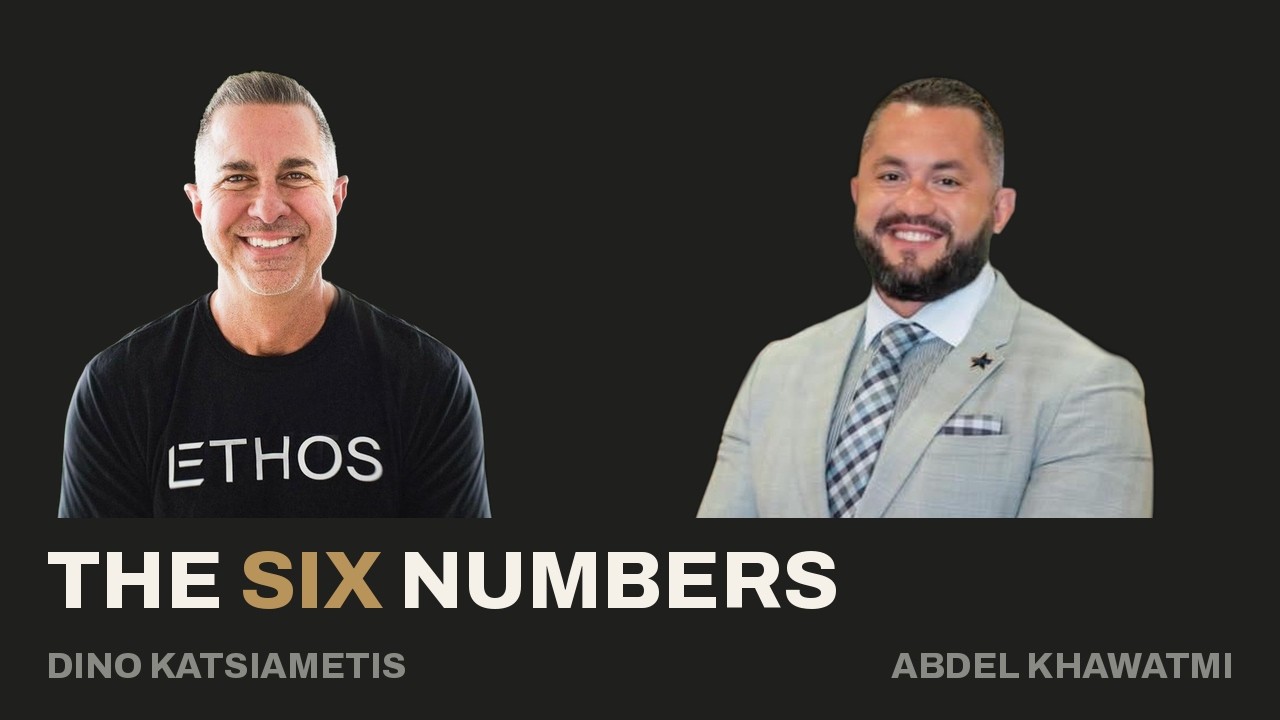
Mortgage team growth takes more than a recognizable brand or a collection of AI tools. In his return appearance on The Way with Dino Katsiametis, Abdel Khawatmi describes an execution-first approach: track the path from visibility to closings, build a distinct identity for each originator, and use technology to make follow-through more consistent. The central lesson is that marketing creates an opportunity, but a repeatable advisory and communication process determines what happens next.
Conversation originally published August 18, 2026. Recap added October 24, 2026.
Watch the original conversation on YouTube.
Key Takeaways: Execution Connects the Entire Business
Asked what he does best, Abdel chooses execution rather than branding, content or AI. That answer organizes the conversation. His recognizable Gorilla identity brings attention, but the operating model underneath it includes measurement, borrower education, scheduled communication, team support and deliberate follow-up.
Three practical takeaways stand out. First, measure intermediate steps rather than judging the business only by closed loans. Second, standardize the service experience without making every originator sound like the team leader. Third, use AI to identify neglected work and prepare useful next steps, not simply to increase publishing volume.
The discussion also challenges the idea that every originator needs the same growth strategy. Abdel describes branding as a core execution pillar, focusing on distinct market positions for originators. The common requirement is an intentional process: know whom you serve, understand what that audience needs, and consistently deliver the experience your marketing promises.
Track the Six C’s to Find Where Business Actually Slows
Abdel’s six C’s are content, clients, conversations, credit, contracts and closings. His definition of content is broader than social media. It includes visibility and interaction through chambers of commerce, networking groups, charitable organizations and face-to-face meetings. The question is not simply how often an originator posts, but where meaningful contact begins.
From there, he looks at the people entering the business and the conversations taking place. CRM records can help show calls, emails, texts and time spent communicating. Credit activity, purchase contracts and closings then reveal whether those relationships are moving toward a transaction. The useful information lies between the stages, not just in their totals.
For example, a relationship channel may produce many prospective buyers who need longer-term credit preparation. Abdel does not dismiss that work. He distinguishes it from business likely to close soon. That distinction matters when allocating time: a valuable education channel and a near-term production channel can serve different purposes.
A practical application is to define each stage before building a dashboard. Specify whether clients means unique inquiries or completed consultations, and distinguish unique households from repeated contact attempts. Then review conversion by source and over a sensible time window. Otherwise, a team can mistake a longer buying timeline for poor execution—or confuse heavy activity with actual progress.
Build Individual Brands on a Shared Operating System
The Gorilla brand began with a gift from a referral partner and grew into a recognizable visual identity. But Abdel does not describe recruiting originators to become copies of that persona. He says individual branding is part of bringing someone onto the team: the originator can use shared systems and resources while developing a distinct market position.
That work begins with two audiences: the consumer and the referral partner. An originator focused on first-time buyers needs different educational material from one focused on investors or self-employed borrowers. Similarly, a financial advisor may need a different explanation of the originator’s value than a buyer’s agent does.
Dino highlights the instruction to treat the brand like a loan file. The analogy makes branding operational rather than decorative. A loan file has requirements, stages and unfinished items; a brand should also have an identified audience, a clear message, supporting content and a process for responding when someone reaches out.
For a team leader, this suggests a useful division of responsibility. Standardize response expectations, communication quality and file preparation. Allow originators to differentiate their voice and educational focus. Recognition should help a prospective client find the right professional, while the shared operating system makes the service dependable after that first conversation.
Lead With the Borrower’s Purpose, Not a Product List
Abdel connects his approach to Start with Why: ask why someone wants to buy, determine how to help, and only then discuss available programs. This is a meaningful distinction from opening a consultation with product features. A borrower’s reason for moving may reveal more about the right conversation than an initial request for a rate.
He contrasts first-time buyer education with discussions involving consumers who have substantial assets or are approaching retirement. The first group may need a clearer understanding of payments, cash to close and ownership responsibilities. The second may need help evaluating liquidity, income documentation and the relationship between financing and other financial decisions.
The conversation mentions non-QM lending, asset depletion, bridge financing and investment-property considerations as examples of knowledge an advisor may need. These are not interchangeable solutions. The practical lesson is to understand the relevant options well enough to ask better questions, then evaluate eligibility, costs and trade-offs rather than treating an unfamiliar product as an automatic answer.
Abdel also emphasizes visual explanations, including amortization and payment comparisons through mortgage presentation tools. An effective comparison makes assumptions visible: loan amount, payment components, cash required and the effect of extra payments. Appreciation and investment returns remain uncertain, while tax and retirement decisions warrant coordination with the borrower’s qualified advisors.
Use AI to Audit Time Before Asking It to Create More Content
When Dino asks where an originator should begin with AI, Abdel starts with the calendar. His interest is accountability: what meetings occurred, what work was completed, and whether the schedule reflects the business the originator wants to build. That is a different starting point from asking AI to write another social post.
He describes comparing periods and identifying shifts between consumer conversations, referral partner meetings and internal leadership work. A growing manager may be busy while spending less time originating. A calendar review can make that trade-off visible instead of leaving it as a vague feeling that production has become harder.
The sensible implementation is a categorized calendar paired with actual business results. Meeting titles and attendance alone cannot explain why loans closed or failed to close. An AI summary can suggest a question—such as whether partner outreach declined—but the CRM and pipeline should help test that hypothesis.
Abdel also describes using AI to assess content against business metrics and separating operational work from marketing work. His broader point is to give the tool a defined job. For a first experiment, an originator could request a weekly comparison of planned and completed outreach, then choose one specific adjustment for the following week.
Turn Meeting Notes Into a Clear Next Action
Abdel recommends a meeting notetaker, but immediately asks the more important question: then what? A recording or transcript is not itself a better client experience. Its value comes from making the next step easier to understand and harder to forget.
His example is a short recap that summarizes the conversation and identifies the actions each person should take. He also discusses using tools such as NotebookLM and landing pages to package supporting information for clients or referral partners. The useful deliverable is not necessarily the longest one; a concise summary may serve someone better than an entire transcript.
Dino adds that communication should be understandable to the recipient rather than merely convenient for the sender. A careful application is to ask about communication preferences and use the person’s actual questions to guide the explanation. There is no need to rely on speculative AI personality labels to write a clearer email.
Recording consent, company-approved tools, appropriate access controls and human review belong inside this workflow. Mortgage conversations can contain sensitive financial information. Before sending an AI-assisted recap, confirm its facts, remove unnecessary details and assign a responsible person and due date to each action. Automation should reduce missed commitments, not distribute inaccurate ones faster.
Create Speed Through Preparation and Predictable Updates
Dino frames speed as a systems issue: a good result delivered through avoidable delay can still create a poor experience. Abdel’s response centers on a defined sequence, including disclosures, appraisal ordering, submission and condition clearing. He also describes preliminary review before a borrower has selected a property.
That preparation connects to a separate set of four C’s: credit, capital, collateral and capacity. These are not his business-development metrics. They are the fundamentals he returns to when discussing qualification and file quality. Early review can identify questions about income, assets or debt before a purchase contract adds deadline pressure.
Communication receives an equally concrete cadence. Abdel describes Monday, Wednesday and Friday updates during the transaction so the borrower and relevant parties know where the file stands. Even when the major milestone has not changed, an update can explain what remains outstanding and who is responsible for the next action.
For implementation, combine a status, an owner and a next step in each update. Share information according to each recipient’s role rather than copying everyone on sensitive details. The objective is not to promise a universal closing speed; it is to remove preventable confusion while maintaining the reviews a particular loan requires.
Combine Scheduled Education With Useful Human Follow-Up
Abdel describes maintaining a long content queue so publishing does not depend on the day he is having. Yet he says current work often supplies his most useful educational ideas. The resulting model has two layers: a scheduled foundation and timely explanations of the questions originators encounter in practice.
That distinction helps avoid a common automation problem. A queue can keep a business visible, but it cannot be left untouched as guidelines, products or market conditions change. Evergreen explanations should be separated from time-sensitive material, and transaction-inspired content should teach the issue without exposing a borrower’s private circumstances.
His follow-up strategy also extends beyond mortgage news. Quarterly homeowner check-ins may include introductions to local maintenance providers or a reminder to locate closing documents before speaking with a tax professional. These contacts have a practical reason to exist even when the homeowner is not considering another loan.
For referral partners, he discusses market updates alongside calls, texts and emails. Importantly, he acknowledges that a frequent cadence depends on team support and suggests starting smaller when necessary. A reliable monthly communication that answers a real question is a stronger foundation than daily messages an originator cannot maintain or support.
Keep Community Work and Team Learning Purposeful
Community involvement is not limited to networking in this conversation. Abdel describes financial-literacy education for local high school students, including career discussions and introductory homeownership concepts. He also discusses working with local organizations and contributing time and visibility, not just financial support.
This adds substance to an education-first brand. Teaching someone who is not an immediate mortgage prospect requires explaining ideas without relying on a transaction to make the conversation worthwhile. Community participation can demonstrate the same clarity and follow-through an originator hopes clients will experience.
Learning is another recurring theme. Abdel describes reading with local referral partners and exchanging implementation ideas with peers. In Dino’s hypothetical about starting over in an unfamiliar market, Abdel combines educational content, local relationships and a stronger understanding of financial markets. His answer is a proposed approach, not an earnings forecast.
The leadership lesson is to turn learning into usable routines. Abdel warns against overwhelming originators with too many tools and experiments. Teams benefit more from a defined process they can repeat than from a growing menu of disconnected capabilities. Community commitments and professional development also need owners and calendar space if they are to survive a busy pipeline.
Final Checklist: Make One Workflow More Executable
Choose the audience. Write down the consumer you want to serve, the referral partner who reaches that consumer, and the question your expertise can help answer. Check whether your recent content reflects those choices.
Establish the baseline. Define the six C’s in your CRM and review where relationships stop progressing. Separate longer-term readiness work from near-term opportunities before reallocating time.
Improve one handoff. Select a consultation recap, a transaction update or a quarterly check-in. Give it an owner, a deadline and a clear next action. Automate only the portions that are stable and appropriate for approved tools.
Review the calendar and the result. Compare intended outreach with completed conversations, then examine whether the new workflow improves follow-through. Keep the change that helps, revise what creates friction, and resist adding another platform before the first process works reliably.
Frequently asked questions
What are Abdel Khawatmi’s six C’s for measuring mortgage growth?
They are content, clients, conversations, credit, contracts and closings. Content includes in-person visibility as well as digital publishing. The framework is most useful when a team defines each stage consistently and examines how people move between stages, rather than tracking only activity totals.
How are the six growth metrics different from the four C’s of lending?
The six C’s measure business development and pipeline progression. The four C’s Abdel references—credit, capital, collateral and capacity—organize the lending assessment. One framework helps explain where business originates; the other helps structure questions about a borrower and the proposed financing.
What is a practical first use of AI for a mortgage originator?
Abdel suggests calendar accountability. Using an approved setup, categorize consumer meetings, partner outreach, internal meetings and follow-up work. Ask for a weekly summary of planned versus completed activity, then compare it with CRM records before deciding what to change.
What should an AI-assisted mortgage consultation recap contain?
Include the client’s stated goal, the main options discussed, unresolved questions and the next actions with owners and dates. Keep it concise and review it before sending. Obtain appropriate recording consent and avoid putting sensitive borrower information into unapproved tools.
How can originators build personal brands within a larger mortgage team?
Keep the service standards and operating resources shared, but define each originator’s consumer audience, referral partner audience and educational strengths separately. An originator serving first-time buyers should not need to adopt the same messaging as one focused on self-employed borrowers.
What is the purpose of Monday, Wednesday and Friday loan updates?
Abdel uses that cadence to keep the borrower and relevant transaction participants informed throughout an active file. Each update can identify the current stage, outstanding items and next action, even if no major milestone has changed. Limit the information shared to what each recipient needs.
How should scheduled mortgage content work alongside timely posts?
Use scheduled material for durable educational topics, then add timely explanations of recurring questions and process challenges. Review queued material regularly for outdated claims. Turn transaction experience into general lessons without publishing identifiable borrower details or implying every loan will have the same outcome.
What can a mortgage professional discuss in a quarterly homeowner check-in?
Abdel mentions check-ins that offer relevant local service introductions or help the homeowner locate closing records. A check-in can ask how the home is working out, offer a relevant local service introduction or help the homeowner locate closing records for a tax advisor. It should have a useful purpose beyond asking for another transaction.
To talk with PRMG Got Mortgages, call 973-536-0276, visit GotMortgages.com, contact the team or build your mortgage plan.
Explore more Got Mortgages Insights and Abdel Khawatmi’s profile. Explore more conversations at the Got Mortgages Podcast website.
Author: Abdel Khawatmi with PRMG Got Mortgages | 973-536-0276
This article is general mortgage information only. It is not a commitment to lend, a rate quote, or legal or tax advice. Loan approval, terms and pricing depend on a full application, credit review and property details, and market conditions change. Talk with a licensed loan officer and your own legal or tax professional about your situation. NMLS #1712023 | PRMG NMLS #75243.