
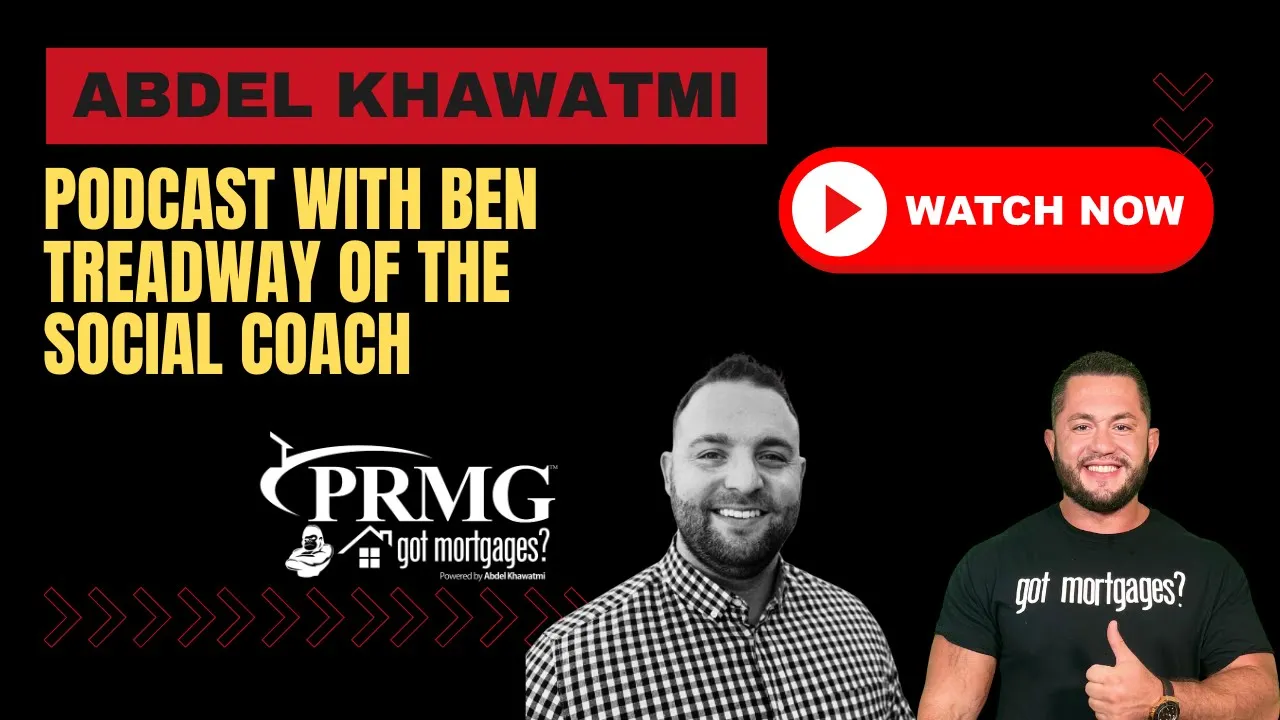
A useful mortgage social media strategy starts with consistent education, a recognizable person and real conversations—not simply more posts or a bigger advertising budget. On the Got Mortgages Podcast, Abdel Khawatmi and Ben Treadway of SocialCoach discuss how loan officers and real estate agents can use short videos, AI-assisted scripts and personal content to become easier to know and approach. Their most actionable point is also the simplest: publishing is only half the job. Responding to the people who already engage with your content deserves a place in the marketing plan.
Conversation originally published August 15, 2023. Recap added October 24, 2026.
Watch the original conversation on YouTube.
Key Takeaways: Make Content a Starting Point for Relationships
Ben’s approach brings three activities together: showing up regularly, making useful content and engaging with other people. A page full of videos is not a complete strategy if questions and comments sit unanswered. Likewise, a polished professional identity can feel distant if followers never learn anything about the person behind it.
For someone starting out, his recommendation is deliberately manageable: publish once a week, then expand when that habit becomes sustainable. Short educational videos can form the foundation, while personal posts give people other reasons to recognize and remember you. AI can help generate scripts, but the professional still needs to own the message.
The discussion highlights that professionals can boost engagement for free by responding to existing comments before spending on advertising. Ben suggests that engaging with the audience you already have is a critical first step often overlooked in favor of paid reach.
Build a Publishing Habit Before Chasing Posting Volume
Abdel raises a familiar problem: how do you know whether you are posting too little or too much? Between Reels, carousels and trending audio, the available formats can make content planning feel like a moving target. Ben steers the conversation away from matching high-volume creators and toward a repeatable weekly commitment.
His suggested starting point is one post on the same day and at the same time each week. He connects scheduling consistency with how platforms understand content activity. For planning purposes, however, the more dependable benefit is operational: a fixed appointment makes recording, reviewing and publishing easier to protect in a busy week. It should not be treated as a proven formula for algorithmic distribution.
A practical application is to reserve one recurring slot for a borrower question and another, later in the week, for responding to the resulting conversation. Only add a second publishing slot once the first is working reliably. Otherwise, increasing output can create a larger backlog of unfinished scripts and neglected replies.
Abdel also contrasts transaction announcements with ongoing education. A strategy built entirely around accepted offers and closings depends on having transactions to announce. Explaining a mortgage concept gives a professional something worthwhile to publish even when there is no milestone photo available.
Use Short Video to Answer One Recognizable Question
Ben points to Instagram Reels, TikTok, Facebook Reels and YouTube Shorts as places to begin with short-form video. His emphasis is on earning attention quickly rather than assuming viewers will wait through a lengthy introduction. The practical lesson is to make the subject immediately recognizable.
For a mortgage educator, that means opening with the question the video will answer. A first-time buyer is more likely to understand the purpose of a clip that begins with a specific borrowing concern than one that starts with a long biography or company introduction. One video can introduce one concept; it does not need to reproduce an entire consultation.
Abdel says his less formal educational content has felt more effective than some heavily produced work. Ben similarly emphasizes the value of showing a personal side. Their observations support testing a simpler production style, not abandoning clarity. A natural delivery still needs understandable audio, an accurate explanation and a clear reason for someone to keep watching.
Try recording a brief answer in a quiet, stationary setting, then listen without watching the screen. If the explanation is hard to follow on its own, visual effects are unlikely to solve the underlying problem. Improve the message before adding more production.
Let AI Reduce the Blank-Page Problem, Not Own the Advice
The episode’s most concrete AI use case is script drafting. Ben suggests telling an AI tool that you are a loan officer and want to record a 45-second video about a subject such as first-time homebuying or FHA loans. The tool can produce possible scripts, giving the creator something to edit rather than requiring a start from scratch.
The conversation names ChatGPT and Google Bard as tools discussed during the episode. Ben noted he had been using Bard because it felt more updated at the time. Their comparisons reflect that period’s experience, not a current ranking of capabilities. The durable idea is the workflow: specify your role, the intended audience, the topic and the approximate length.
An editorial extension would be a prompt such as: Write a conversational 45-second introduction to FHA loans for a first-time buyer. Avoid quoting rates, promising approval or inventing eligibility details. Flag any statements that require professional review. This adds boundaries to Ben’s basic prompt while keeping the task narrow.
The resulting draft needs a human pass for both accuracy and voice. Confirm program statements against appropriate sources, remove unsupported claims and rewrite anything you would not naturally say. A fluent script is not evidence that its mortgage information is correct.
Abdel also describes experimenting with the Captions app to translate a video into Spanish. That illustrates another potential production use, but translated mortgage education needs meaning checked, not merely words converted. Before publishing, have someone qualified review terminology and whether the translated version preserves the original explanation.
Choose Platforms Around the Relationship You Want to Build
Rather than treating every platform as interchangeable, Ben asks who the professional wants to reach. He discusses Instagram in connection with younger buyers and families, Facebook as another consumer-facing channel, and LinkedIn for professional relationships, Realtor connections and recruiting. Abdel identifies Instagram, Facebook and YouTube as his main publishing destinations.
The useful takeaway is audience fit, not a fixed demographic rule. Age alone does not establish someone’s financing needs, and a platform’s audience can change. A loan officer should look at who actually asks questions, shares content and starts relevant conversations on their own pages before deciding where to invest additional time.
For example, a consumer video might explain the purpose of an early mortgage conversation. A LinkedIn post aimed at agents could discuss how lenders and agents coordinate communication during a purchase. Both can demonstrate expertise, but they serve different relationships and should not necessarily use identical framing.
Ben and Abdel also describe limited enthusiasm for Threads during their experience with it. That is a useful reminder that opening an account is not the same as developing a channel. Start where you can publish and participate consistently rather than adding platforms solely because they are attracting attention.
Answer Existing Comments Before Buying More Attention
The advertising discussion becomes especially practical because Ben had already reviewed Abdel’s social activity. He noticed that Abdel was producing content but leaving some comments unanswered. His first recommendation was not another campaign: it was to respond to the people already taking the time to engage.
Ben compares an ignored social comment with walking away from someone who has spoken to you in person. The analogy reframes comment management as ordinary relationship etiquette rather than a technical marketing trick. Acknowledging a compliment or answering a question helps make a public page feel like a conversation.
He also draws a necessary distinction: a positive comment does not mean someone will apply for a mortgage tomorrow. It may simply be an opening for a helpful exchange. A brief thank-you can be enough; when someone expresses a genuine question, an invitation to continue privately may be appropriate.
Ben says SocialCoach does not handle ads or boosted posts. He nevertheless acknowledges that paid promotion can introduce content to new people. His argument is therefore not that advertising never works, but that organic interaction should not be overlooked while paying to acquire more visibility.
A sensible operating rule is to review comments before publishing the next post. Keep public replies general, and move a conversation to an approved private channel if it begins to require personal financial details. Do not turn every friendly reaction into an unsolicited sales pitch.
Use Local Hashtags as a Research and Participation Tool
Ben contrasts broad hashtags such as mortgage or real estate with a more specific example: Phoenix real estate. The point is relevance. A broad category can include people and posts far removed from the community a lender actually serves, while a local topic can make it easier to discover nearby professionals and conversations.
Importantly, he does not stop at attaching hashtags to a post. He recommends browsing the relevant topic, finding other people’s posts and engaging with them. That turns hashtag selection into a way to locate a community rather than a passive hope that a label will produce leads.
Abdel describes using AI to suggest local New Jersey mortgage hashtags, then customizing the results and adding his own brand. A practical refinement is to inspect those suggestions before using them. Check whether they lead to relevant local content, whether they describe the post accurately and whether they reflect an area you actually serve. Local tags are an organizing aid, not a promise of distribution.
Make the Brand Memorable Without Making It Artificial
When Abdel asks how a new professional should start building a brand, Ben does not begin with a logo or website. He asks what makes the person interesting beyond being a loan officer. Common claims such as being responsive may matter to clients, but they are difficult to use as a distinctive identity when many competitors say the same thing.
His clearest example is a lender whose enthusiasm for her corgi became part of her public identity. Ben describes her sharing the dog in posts and participating in corgi-related groups. The example illustrates how a genuine interest can create a recognizable point of connection beyond a product explanation.
The lesson is not to manufacture a quirky persona or assume that a hobby will generate business. It is to identify interests you would discuss even without a sales opportunity. Pets, music or another non-sensitive interest can give people a more natural way to start a conversation.
Ben’s broader argument is that product descriptions alone often struggle to distinguish a professional. That should not be read as saying lenders have identical pricing, eligibility standards or service. A memorable identity can help someone choose to approach you; accurate advice and dependable execution still need to justify that choice.
Final Checklist: Turn the Conversation Into a Weekly Workflow
Choose one audience and one question. Decide whether the next post is intended for a prospective buyer, an agent relationship or a professional recruiting audience. Write down the single point that person should understand after watching.
Set a sustainable publishing appointment. Begin with one weekly educational post. Draft it yourself or use AI for a first version, then verify the substance, make the language sound like you and complete any required review before recording or publishing.
Keep production proportionate. Record a clear, focused explanation, check captions and review any translation. Add personal content only where it reflects something you genuinely want to share; a recognizable brand does not require exposing private family life.
Plan participation alongside publication. Answer existing comments, explore a relevant local topic and leave thoughtful responses where you have something useful to contribute. Record which questions recur so they can inform future videos.
Evaluate conversations before expanding the workload. Look for relevant questions, agent exchanges and opportunities to help—not just raw views. Add another post, another platform or paid distribution when you have the capacity to handle the relationships that additional attention may create.
Frequently asked questions
How often should a loan officer post when starting a social media strategy?
Ben recommends starting with one post each week on a consistent day and time. Treat that schedule as a manageable working habit, not an algorithm guarantee. Add a second post when you can sustain the first and still respond to engagement.
What should a short mortgage education video cover?
Cover one recognizable question rather than an entire financing process. The episode suggests first-time homebuyer and FHA topics. Open with the subject immediately, explain one useful point and leave more detailed or borrower-specific questions for a suitable follow-up conversation.
What information should I put in an AI prompt for a mortgage video?
Include your role, the audience, the topic and the desired length. Ben’s example asks for a 45-second video script from a loan officer’s perspective. You can also instruct the tool to avoid rates, approval promises and invented eligibility details, then independently review the output.
Should I use AI-generated Spanish mortgage videos without further review?
No. Abdel describes experimenting with AI translation, but a translated mortgage explanation still needs a meaning and terminology check. Have a qualified reviewer confirm that the translation accurately conveys the original before publication.
Should a new loan officer boost posts before building organic engagement?
First check whether you are answering existing comments and participating in relevant conversations. Ben identifies those as overlooked, no-media-spend opportunities. Paid promotion can reach new people, but it does not replace a process for responding to them.
How can local real estate hashtags help beyond labeling my posts?
Use them to find relevant local content and professionals. Ben’s Phoenix real estate example pairs a geographically focused hashtag with browsing, commenting and relationship building. Inspect AI-generated suggestions rather than assuming they are active, relevant or effective.
Which platform does Ben suggest for Realtor relationships and recruiting?
Ben points to LinkedIn for professional connections, including Realtor relationships and branch recruiting. The practical next step is to publish content relevant to those audiences and participate in their conversations, rather than copying consumer posts without adapting the message.
How much personal content belongs on a mortgage professional’s account?
Enough to reveal genuine interests without crossing your privacy boundaries or crowding out useful education. Ben’s corgi-lender example shows how a specific interest can make someone memorable. There is no required personal-to-professional ratio; choose subjects you are comfortable discussing consistently.
To talk with PRMG Got Mortgages, call 973-536-0276, visit GotMortgages.com, contact the team or build your mortgage plan.
Explore more Got Mortgages Insights and Abdel Khawatmi’s profile. Explore more conversations at the Got Mortgages Podcast website.
Author: Abdel Khawatmi with PRMG Got Mortgages | 973-536-0276
This article is general mortgage information only. It is not a commitment to lend, a rate quote, or legal or tax advice. Loan approval, terms and pricing depend on a full application, credit review and property details, and market conditions change. Talk with a licensed loan officer and your own legal or tax professional about your situation. NMLS #1712023 | PRMG NMLS #75243.