
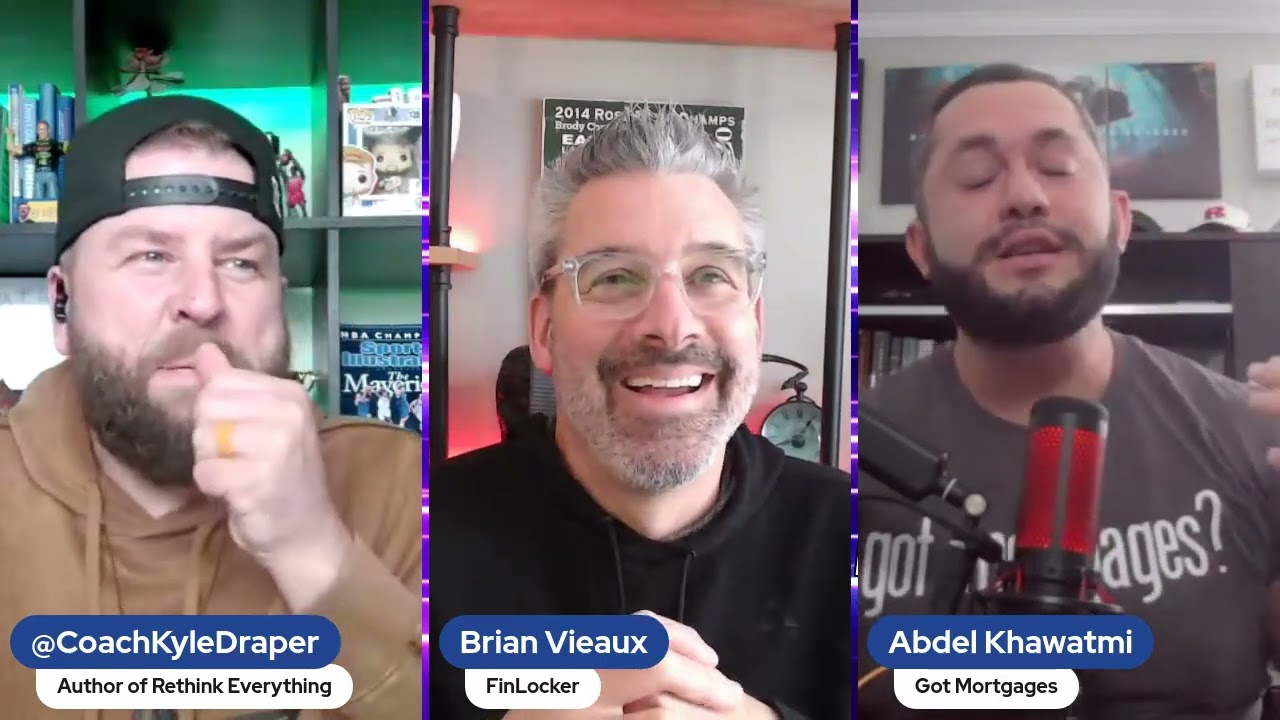
Mortgage social media works best when it helps a future buyer understand something they could not confidently explain before. In this Mortgages and More conversation from FinLocker, Kyle Draper and Brian Vieaux speak with Abdel Khawatmi of Got Mortgages, powered by PRMG, about turning everyday mortgage knowledge into useful videos. His approach combines recurring market updates, plain-language explanations and a recognizable personal presence. The central lesson is not to chase elaborate production or viral attention: it is to research carefully, teach clearly and keep showing up with information people can use.
Conversation originally published March 11, 2024. Recap added October 24, 2026.
Watch the original conversation on YouTube.
Key Takeaways: Build a Teaching Routine, Not Just a Posting Schedule
Abdel’s content strategy rests on several connected habits: learn a subject well enough to explain it simply, give recurring content a predictable place on the calendar, and use audience behavior to improve the delivery. Social media becomes an extension of the loan officer’s educational work rather than a separate performance requiring a studio and a new personality.
The episode also draws a useful distinction between help with production and responsibility for the message. AI tools, captions, teleprompters and automated editing can make publishing easier. They do not replace understanding the mortgage topic. Likewise, an approachable video still needs a clear explanation; authenticity is not a substitute for accuracy.
For a mortgage professional applying these ideas, the practical objective is a repeatable loop: identify a real question, research it, explain one useful point, publish, review the response and improve the next installment. The loop can support both prospective homebuyers and real estate partners without making every post a request for business.
From One-to-One Conversations to Education at Scale
Abdel describes entering mortgages after working in the legal field, where he encountered people seeking help with a home purchase and saw the frustration caused by poor follow-up. He obtained his mortgage license in 2018, began part-time and later moved into the business full-time. His early experience put communication, not simply product knowledge, at the center of his work.
The appeal of social media followed naturally. A private conversation reaches the person in front of you. A seminar reaches a larger group. A useful video can make the same explanation available to people who have not yet asked for an appointment. For someone still learning how homebuying works, that creates a less intimidating starting point.
A practical step is to treat content as preparation for a better conversation, not as a replacement for one. A buyer who understands basic terminology can arrive with more specific questions. The video should establish what a concept means and why it matters, while leaving individual qualification and transaction decisions for a properly informed discussion.
Authenticity Is About Removing Production Friction
Abdel’s early production routine was considerably more formal than his later approach. He recalls taking several suits to his branch and recording batches of videos over a few hours, covering subjects such as FHA versus conventional financing and the steps in buying a home. He recalls weighing significantly less and wearing one of several suits he would bring to his branch to record batches of videos.
Over time, he says he observed stronger engagement when he used his phone and appeared more naturally in Got Mortgages clothing. That is his account of his own audience, not evidence that every loan officer should abandon formal clothing. The broader lesson is to avoid a production style that makes recording unnecessarily difficult or creates distance from the way you actually communicate.
Kyle also distinguishes a physical green-screen setup from the background-image features available inside social platforms. An article image behind a speaker can provide context without requiring studio equipment. Used thoughtfully, that visual helps orient the viewer to the subject. It should support the explanation rather than become an excuse to read an entire article on screen.
Find Content Ideas by Learning to Explain, Not Copying
Before AI became part of the discussion, Abdel found topics by reading consumer-facing blogs from sources such as Zillow and Realtor.com. His exercise was to absorb the material and then work out how to explain it in very simple language. As his knowledge grew, he also followed mortgage and housing sources including MBS Highway, Mortgage News Daily, MarketWatch and HousingWire.
The important distinction is between borrowing a topic and reproducing someone else’s article. A useful original video answers a question for a particular audience, using the loan officer’s own explanation and verified understanding. Merely compressing a published article can preserve its jargon and assumptions instead of making the topic easier for a buyer.
A practical topic-development method is to write down three things after reading: the question a buyer would ask, the one idea needed to answer it, and the next question that explanation is likely to raise. Those notes can become separate videos. This keeps an introductory clip focused while creating a natural path toward more detailed education.
AI can help brainstorm those questions or organize an outline. In the episode, however, Abdel says much of his own material comes from live examples and current topics. The strongest source of a distinctive voice is still the professional’s understanding of what people actually need explained.
Market Updates Should Translate Confusion Into Context
Abdel identifies market commentary as an important shift in his content. He describes the difficulty of interpreting economic releases when different outlets frame the same information differently. If an originator who follows the market needs time to understand a report, a consumer encountering a headline has even less context.
His recurring Monday Market Updates give that work a regular place in his schedule. He describes using MBS Highway material as part of the process and customizing the presentation for his audience. Subjects include inflation reports, retail sales and the Federal Reserve. The value is not merely announcing that a report was released; it is explaining why someone thinking about a mortgage might care.
A useful editorial structure is to separate three layers: what was reported, how markets responded, and what remains uncertain. Consumer Price Index and Producer Price Index reports concern different parts of the inflation picture. Neither should be reduced to a permanent rule that one headline always produces one mortgage-rate outcome.
For a buyer, a good update supplies context rather than an instruction to time the market. For the creator, it creates a disciplined research obligation: understand the release before recording, make the distinction between observation and interpretation clear, and avoid turning a short-term market reaction into a promise about what happens next.
Use Recurring Examples to Make Mortgage Options Understandable
Alongside Monday Market Updates, Abdel describes a 150 pounds when he started and significantly heavier now. This gives the content calendar two different jobs: market updates explain the environment, while scenario-based videos explain a process or financing concept that viewers may not know exists.
The transferable lesson is to choose the educational point before telling the story. A condo-related video might explain that financing involves questions about the property as well as the borrower. It need not disclose a client’s finances, location or transaction history to make that distinction useful.
For professionals adopting the format, (Delete these sentences) The strongest scenario content leaves viewers with a better question to ask, not an assumption that they have already qualified.
Teaching Improves Expertise Only When Old Content Gets Updated
Brian asks whether preparing videos has helped Abdel become a better loan officer technically. Abdel connects the work to reading HUD and Fannie Mae guidance, learning from mistakes and keeping up with changes. Kyle describes this as learning to teach rather than learning only to absorb information: explaining a concept forces the creator to work out its practical meaning.
That benefit also creates a maintenance responsibility. Abdel notes that changes in conventional financing requirements meant older comparisons and team flyers needed revision. His point is operational as much as educational. A loan officer can understand a change while an assistant continues distributing an outdated graphic.
A practical application is to maintain a content inventory for posts and materials containing program requirements. Record the subject, the person responsible for review and where the material is reused. When guidance changes, check the video description, companion flyer, saved template and team distribution process together. Evergreen presentation does not make a mortgage rule permanently current.
This is especially important when a short comparison compresses a complicated subject into a few numbers. An engaging format should never conceal eligibility conditions or suggest that an old program summary is a substitute for reviewing the applicable requirements.
Let Audience Retention Shape the Length and Packaging
Abdel explains that his videos were once much longer because he had so much to cover. Reviewing platform analytics showed him where attention was falling away, which encouraged shorter presentations. He also reports seeing a positive response after adding deliberate reel cover images and clearer taglines instead of relying on a randomly selected video frame.
These observations support testing, not a universal formula. The episode does not establish one ideal length for every mortgage explanation. A market headline and an explanation of a property-approval process may require different treatment. The useful question is whether each sentence advances the viewer’s understanding.
A practical review should examine the opening, the point where the explanation becomes technical and the point where the answer is complete. If viewers leave before the main idea, move that idea earlier. If a clip needs several qualifications, consider a focused introduction followed by a separate deeper explanation. Use the cover to state the question clearly rather than making a claim the video cannot support.
Use AI Editing to Reduce Work, Then Review the Result
Kyle and Abdel compare their workflows in Captions. Kyle describes recording with his phone camera, importing the footage, choosing a caption template, using automated trimming and applying a noise-reduction tool. Abdel describes a similar sequence, sometimes adding music and reviewing automatically inserted visual elements. Both emphasize using a manageable subset of the available tools.
They also discuss teleprompters, AI-generated ideas, translation and extracting shorter clips from longer videos. These are examples of how they used the tools at the time of the conversation, rather than a specification of what any current subscription includes. Abdel’s attitude toward teleprompters is pragmatic: needing support to get started should not prevent a professional from publishing.
For mortgage education, the final review is essential. (Delete these sentences) Faster production is valuable only if the edited message remains faithful to the intended explanation.
Start with the smallest workflow that solves a real obstacle. Clear captions and understandable audio may matter more than animated extras. Additional features should earn their place by improving comprehension, not simply because the app offers them.
Final Checklist: Turn Education Into a Repeatable Service
Choose your recurring formats. Following the distinction in Abdel’s approach, assign one slot to timely context and another to a buyer question or general process example. Select a cadence you can sustain, and keep a short list of questions from everyday professional conversations.
Research before recording. Confirm the underlying concept, write the answer in ordinary language and decide which details belong in a separate discussion. Record with a simple setup that feels natural, then check the sound, captions, opening sentence and visual title before publishing.
Review and maintain. Use retention information to improve the next explanation, not merely to celebrate views. Identify materials that contain changing requirements and make sure assistants and loan officers use the updated versions.
Extend the same service mindset to referral relationships. Abdel closes by describing recurring meetings with real estate teams that combine market updates and sales education, rather than simply asking for deals. The practical closing question is: what can this explanation help a buyer or partner understand or do better? If that answer is clear, the content has a purpose beyond filling a feed.
Frequently asked questions
What mortgage topics can a loan officer post about every week?
The episode offers two distinct formats: a recurring market update and a scenario-based educational segment. A market update can explain one economic release; a scenario segment can explain a concept such as FHA single-unit condo approval without sharing borrower details. Keeping these formats separate helps avoid repeating the same kind of post.
How can mortgage market updates be made easier for homebuyers to understand?
Explain what was reported, why it matters to mortgage markets and what remains uncertain. Define terms such as CPI or PPI before discussing their implications. Avoid treating an economic release as an automatic prediction of a buyer’s future rate.
Does a loan officer need a studio or physical green screen?
No. Abdel describes moving from a formal setup to phone-recorded videos, while Kyle explains that platform background-image features can place an article behind the speaker without a physical green screen. Prioritize understandable audio, a clear subject and a presentation you can repeat consistently.
How long should a mortgage education reel be?
Make it long enough to explain one point accurately, then use retention data to refine it. Abdel shortened his videos after reviewing where viewers stopped watching. Rather than forcing every subject into one duration, split a broad topic when a short clip cannot preserve the necessary explanation.
How can AI help create mortgage videos without taking over the message?
Use it to brainstorm questions, organize an outline, generate captions or assist with editing. Keep the factual explanation under professional review. Check technical terms and any edits that might remove conditions or change the meaning of a mortgage statement.
What is a simple Captions editing workflow discussed in the episode?
Record on a phone, import the video, choose a caption style, trim unnecessary pauses and review the audio. Kyle describes automated trimming and noise reduction; Abdel also discusses optional music and visual elements. Review the finished export rather than assuming automation handled every detail correctly.
What should happen to older FHA-versus-conventional content when requirements change?
Review all related materials, not only the original post. Abdel specifically raises the need to update team flyers after guideline changes. Check saved graphics, descriptions and templates, and replace or clearly retire material that could communicate outdated requirements.
How can educational content support real estate referral relationships?
Use the material to answer questions partners face with buyers. Abdel describes recurring team meetings combining market updates with sales education. A useful application is to bring one clear explanation and a discussion question, rather than making the meeting primarily a request for referrals.
To talk with PRMG Got Mortgages, call 973-536-0276, visit GotMortgages.com, contact the team or build your mortgage plan.
Explore more Got Mortgages Insights and Abdel Khawatmi’s profile. Explore more conversations at the Got Mortgages Podcast website.
Author: Abdel Khawatmi with PRMG Got Mortgages | 973-536-0276
This article is general mortgage information only. It is not a commitment to lend, a rate quote, or legal or tax advice. Loan approval, terms and pricing depend on a full application, credit review and property details, and market conditions change. Talk with a licensed loan officer and your own legal or tax professional about your situation. NMLS #1712023 | PRMG NMLS #75243.