
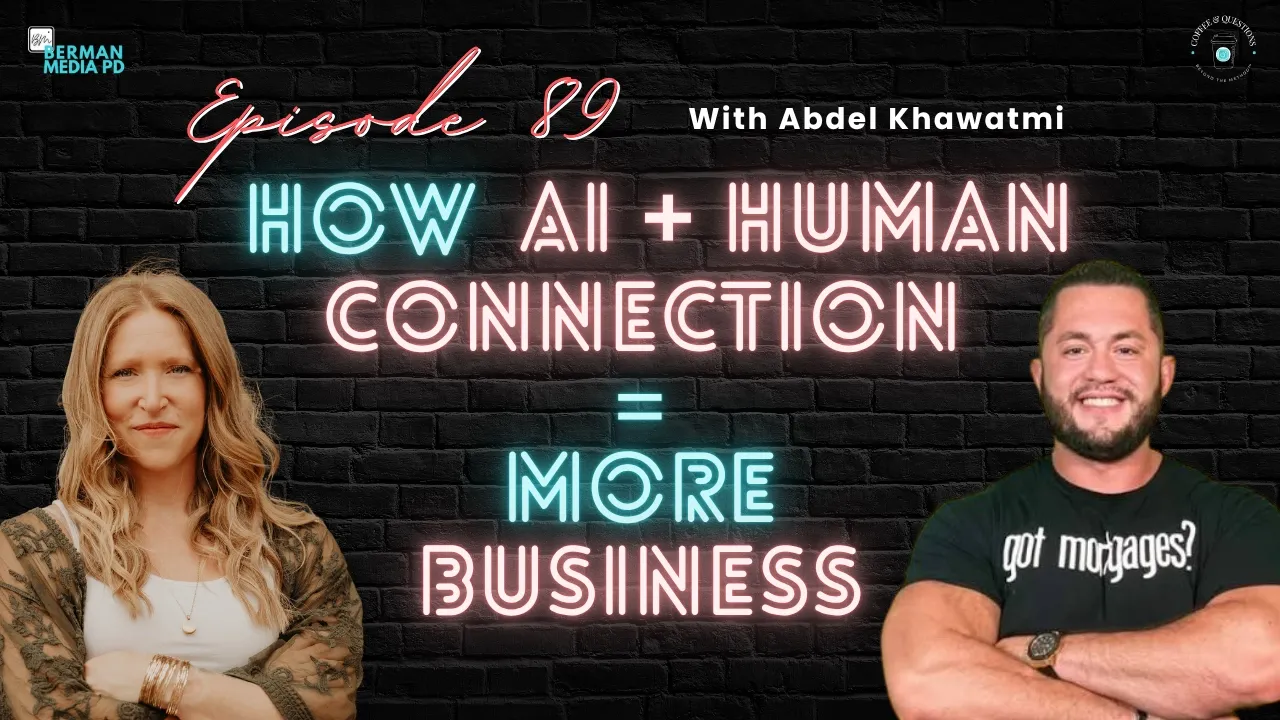
AI can help mortgage professionals identify prospects and prepare for conversations, but the relationship still depends on a person doing the work of connecting. That is the central message of n/a (No issues found) The Got Mortgages founder describes a workflow that combines prospect research, social media, calls, texts, email and operational accountability. Michelle adds a complementary perspective: use technology to find the opportunity, then slow down enough to write a message worth answering. Together, their discussion offers a practical alternative to both mass automation and unstructured relationship building.
Conversation originally published June 26, 2026. Recap added October 24, 2026.
Watch the original conversation on YouTube.
Key Takeaways: Research Faster, Connect More Deliberately
The episode’s strongest distinction is between preparing to prospect and actually prospecting. Abdel uses AI to organize research and support repeatable workflows. Michelle uses it to identify promising opportunities, but reserves the final outreach message for herself. Neither treats a researched contact list as a substitute for a conversation.
Their approaches are not identical. Abdel’s team follows prospects on social media early in the process; Michelle prefers a conversation-first approach followed by a delayed follow-back. Rather than declaring one method universally better, they discuss testing the difference.
The broader system has several connected parts: define the right audience, research before reaching out, demonstrate relevant value, protect time for personal contact and measure what happens afterward. Operational follow-through matters just as much as the opening message. A friendly introduction loses credibility if the team cannot deliver the communication and coordination it has promised.
Define the Referral Partner Before Asking AI to Find One
Abdel’s starting point for outbound prospecting is an ideal client avatar, not a tool. For real estate agents, he considers geography, the balance of buyer and seller business, and the typical price range of the homes they handle. He describes focusing locally in New Jersey, including Monmouth and Ocean counties, and looking for partners whose business aligns with the lending work his team is positioned to support.
That specificity matters because a large prospect list can still be commercially irrelevant. An agent whose practice centers on a segment outside a lender’s strengths may not be the best relationship to prioritize. The useful question is not simply whether someone produces business, but whether the two businesses can serve shared customers well.
Abdel also separates three audiences: loan officers, consumers and referral partners. Each needs its own relationship strategy. Within referral partners, he looks beyond agents to attorneys, financial advisers, insurance professionals, contractors and builders. A practical application is to rank those categories before researching individual names, using service fit and local market needs rather than treating every contact as equally urgent. Consumer outreach should remain inclusive; a marketing focus is not a basis for restricting access to mortgage services.
Use AI to Standardize Preparation, Not Manufacture Familiarity
For inbound leads, Abdel describes researching social profiles before the first call. His team uses a configured Claude project with standing instructions, reducing the need to repeat the same research request across multiple platforms. The intended output is a more organized starting point for the person making contact, rather than a fresh scavenger hunt for every lead.
For outbound work, he describes using Model Match for real estate agent research and AI to help find other professional partners, their websites and their social presence. A separate brand-audit project supports further preparation. The operational insight is that a reusable research process can make preparation more consistent across a team, rather than leaving it dependent on one originator’s habits.
Michelle offers a parallel example from her speaking business. AI helps identify organizations that may fit her interests and expertise. She then checks the organizations, identifies decision-makers and studies their professional profiles before composing a message herself.
For a mortgage team applying this approach, public professional information is the sensible starting point. Check that a profile belongs to the correct person, confirm important details directly and keep sensitive borrower information out of unapproved tools. Finding a profile does not establish permission for every kind of outreach, and an AI-generated summary should not become an assumed personal history.
Treat Social Follow Timing as a Testable Choice
Abdel’s team incorporates social media at the beginning of the lead workflow, alongside calls, texts and email. The team follows the person early and uses relevant public information to make the eventual conversation less generic. His emphasis is on arriving prepared and recognizing the person behind the contact record.
Michelle challenges one element of that sequence. Her concern is that an immediate follow from a loan officer can look like a request for business before any relationship exists. Her alternative is to initiate a direct-message conversation first, let the other person choose to follow, and follow back roughly 48 hours afterward. In her explanation, that later action creates another notification after the conversation has already begun.
These are two different relationship hypotheses, not proven platform rules. Abdel proposes comparing results across team members. A useful implementation would track replies, substantive conversations and meetings for each approach while keeping the audience reasonably similar. A follow-back alone is a weak outcome. The more important question is whether the timing helps people enter a genuine, welcome conversation.
Make the First Message Specific Without Making It Intrusive
Abdel gives the example of acknowledging an agent’s recently completed transaction rather than sending a generic introduction. The point is that the sender has noticed something concrete about the recipient’s work. Michelle similarly emphasizes intentional messages informed by research, not a copied paragraph distributed to many people.
The practical takeaway is straightforward: choose one relevant observation, explain why it caught your attention and give the recipient an easy way to respond. For example, an agent’s public explanation of a difficult transaction could lead to a question about how they coordinate financing updates. That creates a professional conversation without opening with a referral request.
Tone is another part of the preparation. Abdel describes adjusting his level of formality to the conversation while retaining his personality. That does not require copying his highly informal style. A more reserved originator can be equally recognizable and sincere. Nor does personalization require mentioning everything a person has posted online. Professional relevance is often a better starting point than personal detail, particularly when the relationship is new.
Give a Prospective Partner Something Useful Before the Meeting
One of the episode’s most concrete outbound practices is Abdel’s pre-meeting resource link. Once a potential partner shows interest, his team prepares a central place containing its value offerings, contact information, relevant resources, collaboration ideas and guidance for introducing a shared client. The purpose is to make the upcoming conversation more useful than a generic request to exchange business.
This preparation also makes the relationship easier to evaluate. A prospective partner can see how the team communicates and what working together might involve. The meeting can then focus on actual coordination questions: who handles an introduction, what information is needed initially and how updates move between the parties.
A practical version does not need elaborate design. A concise, accurate overview of the workflow and available educational resources may be enough. Tailor it to the partner’s role instead of presenting every capability at once. Any co-marketing, hospitality or other thing of value involving referral sources should go through compliance review; useful preparation should not become an inducement for referrals.
Build Prospecting Promises Around Operational Reality
Abdel repeatedly connects sales credibility with operations. He describes cross-training across business development, growth, sales and operational functions so team members understand how work moves after the initial conversation. His stated preference is operations first, sales second: originators should know what their team can actually support before making commitments.
Communication is part of that operational identity. He describes a consistent Monday, Wednesday and Friday email cadence, rather than leaving updates to memory or waiting until someone asks. The broader lesson is to make the service experience visible and repeatable. Referral partners should not have to guess when they will hear from the lender.
He also argues for protecting attention: finish the task in front of you and give an honest callback time rather than interrupting critical work repeatedly. For a prospecting system, this creates an important boundary. New conversations must not undermine current service. When something goes wrong, a direct call, clear ownership and a realistic next step are more valuable than an automated reassurance. Trust depends on how the team handles friction, not just how confidently it introduces itself.
Keep Consumer Follow-Up Connected to the Home Search
Near the end of the conversation, Abdel makes a specific distinction about his consumer nurture messages: they focus on the home search rather than only on mortgage terminology. Bedrooms, bathrooms and location are examples of the topics he wants to discuss. Those questions keep the financing relationship connected to what the customer is trying to accomplish.
This does not mean avoiding affordability or loan details. It means placing those details in context. A question about whether a buyer’s preferred area has changed can lead naturally to a useful financing discussion. A generic request to check in often gives the recipient less reason to respond.
Abdel also favors proactive education when consumers are likely to encounter market headlines. The useful application is to explain what a development may mean for an individual decision without predicting a particular rate move. Borrowers should remain free to compare lenders and ask questions. Personal trust is strengthened by clear comparisons and responsive explanations, not by treating reasonable shopping as disloyalty.
Measure the Relationship Workflow, Not Just Social Reach
Abdel describes reviewing business metrics with his team every Friday, including sources of business, credit-pull activity, closings and time to clear to close. His point is that accountability becomes more useful when it addresses observable activity and results rather than vague impressions of effort.
These measures answer different questions. Source tracking shows where opportunities begin. Progression from initial contact toward application and closing helps identify where people disengage. Operational timing can reveal problems after the prospecting work has already succeeded. No single number explains the whole relationship, so review the underlying circumstances before drawing conclusions about an individual or channel.
Michelle contrasts this discipline with chasing the latest algorithm change. Her proposed habit is one intentional message each day to someone she does not know, sometimes drawing on a genuine mutual connection. Abdel adds time blocking and thoughtful scheduling. Neither idea requires constant platform experimentation. The practical balance is a stable outreach habit, enough time for relationships to develop and periodic review of whether the activity produces useful conversations rather than merely views.
Final Checklist: Put One Complete Prospecting Loop Into Practice
Define one partner audience. Write down the geography, business mix, service needs and communication expectations that make a relationship worth pursuing. Keep those criteria tied to legitimate business fit.
Prepare a reusable research workflow. Gather public professional information, check identity and accuracy, and assign a person to review the output. Decide which tasks AI may assist with and which require direct human judgment.
Write one relevant opening message. Reference a genuine professional observation, ask an answerable question and avoid implying a relationship that does not exist. Choose an early-follow or conversation-first approach and record which you use.
Prepare for the next step. Have a concise partner resource ready, document who owns the follow-up and protect time for calls. For consumers, connect follow-up to their home-search goals and preferred communication channel.
Review the full loop regularly. Look at replies, conversations, meetings, applications, closings and service bottlenecks. Change one weak point at a time rather than replacing the entire system. The episode’s practical challenge is not to automate more contact; it is to make preparation, personal attention and reliable execution work together.
Frequently asked questions
How can a loan officer use AI before contacting a referral partner?
Use it to organize public professional research around a defined target: location, business focus, website, social profiles and potential collaboration needs. Verify the results, identify the right decision-maker and write an opening message based on a genuinely relevant detail.
What is Michelle Berman Mikel’s 48-hour social follow rule?
She describes starting a direct-message conversation without immediately following the prospect. After the prospect follows her, she waits roughly 48 hours before following back. It is her relationship-building tactic, not a platform requirement or an established conversion benchmark.
Does Abdel follow prospects before the first phone conversation?
He says his team researches and follows prospects early in the lead workflow, before or alongside phone, text and email outreach. He is also open to testing Michelle’s conversation-first approach against his team’s existing method.
What should go into a mortgage referral partner’s pre-meeting resource?
Include a concise explanation of relevant services, contact details, useful educational resources, collaboration ideas and a clear introduction process. Keep it tailored to that partner’s work, avoid unnecessary borrower information and review referral-related arrangements for compliance.
Which referral partners does the episode discuss beyond real estate agents?
Abdel names attorneys, financial advisers, insurance professionals, contractors and builders. The recommended starting point is to prioritize the categories that fit the local market and the lender’s service strengths, rather than pursuing every category simultaneously.
What should mortgage nurture messages discuss besides financing?
Abdel emphasizes home-search topics such as bedrooms, bathrooms and preferred locations. These questions can reveal changing needs and create a natural opening to revisit affordability, financing preparation or the buyer’s next step.
Which metrics help evaluate a mortgage prospecting workflow?
The episode discusses business sources, credit pulls, closings and time to clear to close. For a practical outreach dashboard, also track replies, substantive conversations and meetings. Review the stages together so weak prospecting is not confused with a later service bottleneck.
How can a busy originator make this approach manageable?
Start with one defined audience, one repeatable research process and a protected block for personal outreach. Michelle suggests one intentional new message daily. Abdel emphasizes time blocking and focused execution. Expand only after the team can consistently handle the conversations and service obligations already created.
To talk with PRMG Got Mortgages, call 973-536-0276, visit GotMortgages.com, contact the team or build your mortgage plan.
Explore more Got Mortgages Insights and Abdel Khawatmi’s profile. Explore more conversations at the Got Mortgages Podcast website.
Author: Abdel Khawatmi with PRMG Got Mortgages | 973-536-0276
This article is general mortgage information only. It is not a commitment to lend, a rate quote, or legal or tax advice. Loan approval, terms and pricing depend on a full application, credit review and property details, and market conditions change. Talk with a licensed loan officer and your own legal or tax professional about your situation. NMLS #1712023 | PRMG NMLS #75243.