
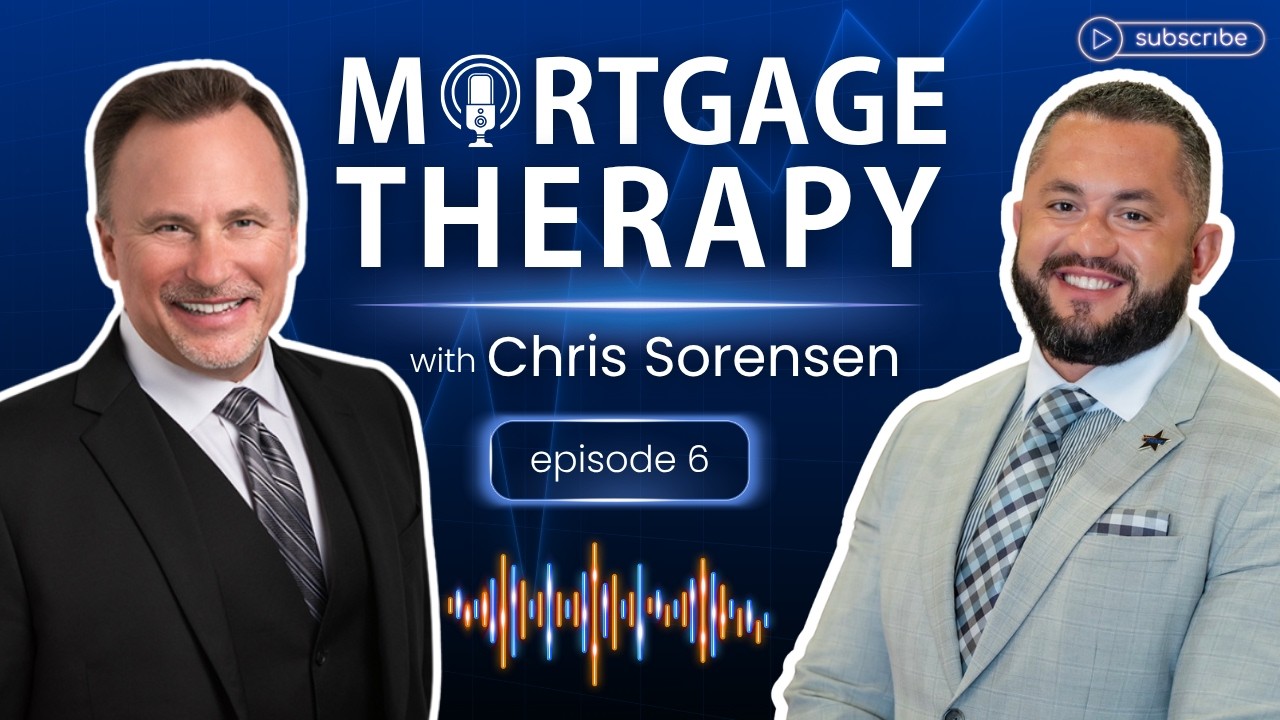
The strongest use of mortgage AI is to create room for better human conversations, not to replace them. That is Abdel Khawatmi’s central argument in his conversation with Chris Sorensen on Mortgage Therapy, presented through PRMG’s Modern Mortgage Strats. Abdel describes a business that uses automation for discovery, content preparation and notifications while reserving rapport, explanation and reassurance for people. His practical message is to build technology around the business you actually run, then measure whether it helps you serve clients and develop relationships.
Conversation originally published October 8, 2026. Recap added October 24, 2026.
Watch the original conversation on YouTube.
Key Takeaways: Build Systems That Make You More Available
Abdel’s approach separates work that needs consistency from work that needs judgment. Technology can prepare materials, deliver notifications and support initial lead engagement. A loan officer still needs to recognize uncertainty, explain choices and help someone feel comfortable moving forward. The handoff between those responsibilities matters more than the number of tools in the business.
Several practical ideas connect throughout the episode: write down successful processes before automating them; publish useful written answers alongside video; make an automatic email response educational; and protect time through dependable team coverage. None requires an originator to become an impersonal digital brand.
The closing PROOF framework brings those ideas together through persistence, relevance, presence, operations and fundings. It is a way to examine whether a mortgage business has repeatable habits, a recognizable specialty, discoverable expertise, reliable execution and a clear understanding of where closed business comes from.
Communication Was the Opportunity Before AI Entered the Picture
Abdel traces his entry into mortgages to his work managing a law firm. People who trusted him through that work later sought help connecting with mortgage professionals. The recurring weakness he noticed was communication. That experience shaped his view that responsiveness and clarity are not finishing touches on a mortgage service; they are central to the service itself.
He illustrates the point with his return from a family trip. Although his team had continued handling business, he personally contacted clients with preapprovals, accepted offers and active contracts. The purpose was not to duplicate every operational task. It was to reestablish that the person clients knew was still present and accountable.
He also advocates sending updates before referral partners ask for them. A useful application is a concise status message explaining what has changed, what remains outstanding and who owns the next step. If employment verification is still pending, saying so early is more useful than waiting for an anxious request about closing. Proactive communication gives a team a service standard that automation can support rather than impersonate.
Design the Human Handoff Before Choosing Mortgage Technology
When someone asks which technology he uses, Abdel first asks about the business model. Is the originator focused on purchases or refinances? Is business consumer-direct or relationship-driven? If relationships are central, are the important partners real estate agents, financial advisors, attorneys or accountants? The answers determine which tasks are worth systematizing.
His preferred boundary is particularly clear in lead engagement. AI may help move a cold inquiry toward a warmer conversation. Once there is an opportunity to establish rapport, he wants the human professional involved. He distinguishes client notifications from client communication: a system can deliver an update, but delivering an update is not the same as understanding the borrower’s concern.
For a team applying this idea, the first project should be a handoff map rather than a software purchase. Define what qualifies an inquiry for personal contact, who receives it and what happens if that person is unavailable. Identify questions that require judgment instead of another automated message. A system that produces more engagement without assigning responsibility can increase the very communication gaps it was meant to solve.
Authentic Content and Relationship Capital Need a Real Person
Abdel’s change of mind about HeyGen is one of the episode’s clearest examples of reassessing technology. He had experimented with creating a convincing digital version of himself, supported by a substantial library of his own content. He later decided that the result did not preserve the authenticity he wanted. His objection is about his own brand and communication preferences, not a demonstration that every use of synthetic video fails.
That decision fits his emphasis on relationship capital. Being familiar to a referral partner is not enough; the relationship needs continuing contributions. He uses the analogy of bringing a gift when visiting someone rather than relying indefinitely on the goodwill created by the first visit.
In practice, that contribution should reflect the partner’s work. A real estate agent may benefit from an accessible homebuyer explanation, while an accountant may need a productive conversation about documentation questions. The editorial lesson is to judge content by whether it helps the next real conversation. A polished avatar or an impressive posting schedule has limited value if neither makes the professional more useful.
SEO, AEO and GEO Start With Questions Borrowers Actually Ask
Abdel describes three overlapping discovery concepts: search engine optimization, answer engine optimization and generative engine optimization. His plain-language distinction is between being found through search and being represented in systems that help users obtain answers. He argues that mortgage professionals should not depend exclusively on attractive visuals or short social videos to communicate their expertise.
The practical emphasis is written substance. A page explaining a specific homebuying question gives visitors something to read, revisit and share. Clear headings and useful FAQs also make the subject easier for search and answer systems to interpret. These practices support discoverability, but they do not control whether a particular platform will index, rank or cite a page.
The episode’s minimum-down-payment example shows why specificity matters. A useful article would explain that the answer depends on the loan program, eligibility and transaction, rather than presenting one number as universal. For an originator, the opportunity is not simply to publish more words. It is to answer the questions that appear repeatedly in consultations and connect those explanations to a straightforward way to get individual help.
Turn Original Video Into a Repeatable Written Content Workflow
Abdel describes a concrete workflow built around his longer YouTube videos, including mortgage market updates. His team retrieves the transcript and places it in a Claude project with established instructions. That project helps prepare the video description using language relevant to the subjects people search for. The important operational detail is the reusable instruction set: the team is not reinventing the assignment every time.
This creates a distinction between using AI to support original expertise and asking it to manufacture expertise. The starting material is an actual explanation from the mortgage professional. The tool helps organize and repurpose it. Abdel also describes using documented workflows for written publishing rather than treating content as an unstructured stream of generated posts.
A practical extension is to assign a human review before publication. Check that the written version preserves qualifications, distinguishes historical market commentary from current information and does not turn a conditional statement into a promise. Although the discussion mentions schema, optimized description text and technically valid structured data are different things. Content preparation should not be mistaken for completed technical implementation.
The workflow also raises an ownership issue. Abdel describes the difficulty of moving a substantial existing article library to a different website. Before changing hosting or design, a team should inventory its useful pages, preserve working links and plan how readers will reach the material afterward.
Make the Out-of-Office Reply a Useful Resource Directory
One of the episode’s most immediately usable ideas is Abdel’s automatic email response. He initially resisted out-of-office messages because he did not want to advertise that he was unavailable. After hearing Jeremy Forcier discuss adding value to those replies, he reframed the message as a service opportunity rather than an announcement of absence.
His version explains that he is unavailable, directs urgent matters to operations or a production partner and offers educational resources. The resources serve different audiences: homebuyer videos, a document library, referral-partner information, an originator toolbox and podcast content. He describes scheduling the response for evenings and weekends, not only vacations.
A useful adaptation would keep the urgent contact route above the resource links and label each link by the problem it solves. Someone facing a transaction deadline should not need to browse a content library to find help. Someone researching a purchase, however, may welcome an explanation they can use immediately.
Abdel says partner feedback and website activity helped him see that people were engaging with those resources. For another team, link engagement is a starting signal, not proof of a completed loan. The more useful measurement connects resource visits with subsequent questions, appointments and qualified opportunities.
Scale Through Operations, Focused Training and Protected Attention
Chris asks whether Abdel would rather concentrate on personal production with support staff or scale by hiring originators. Abdel remains open to hiring, but emphasizes discipline and execution. Access to a system does not mean a new originator will consistently use it. He describes a training launchpad intended to help new hires navigate the resources already available.
His advice is not to adopt every possible tactic at once. An originator can choose a productive avenue, execute it and bring the learning back to the team. He organizes the business around sales, service and support: generating opportunities, servicing transactions and supporting both referral partners and colleagues. This is a more useful onboarding structure than presenting a long list of disconnected tools.
Operational expertise also matters when a file becomes complex. Abdel discusses the value of having people available to help with loan structure and guideline questions, including non-QM scenarios. The broader lesson is to escalate uncertain interpretations to qualified operations staff rather than rely on an answer that merely sounds favorable. Product examples in the conversation are not universal eligibility rules.
Protected attention is part of the same design. Abdel describes app limits, planned communication windows and physically putting his phone away during family time. Those boundaries depend on trusted coverage. The business objective is not permanent personal availability; it is dependable service with clear ownership when the producing manager is offline.
Use PROOF to Connect Marketing With Funded Business
Persistence begins with documenting what works. Abdel argues that a process held only in the originator’s head cannot be easily delegated. He cites the 80/20 rule—incorrectly attributed in the transcript to Plato—to show that writing down follow-up habits, useful explanations and repeatable actions exposes which tasks can be assigned or automated without losing the service standard.
Relevance means choosing whom to serve and how to be known. He uses VA lending as an example of a potential specialty and cautions against trying to present oneself as an expert in every category. Presence then concerns whether people can find enough consistent information across channels to understand the professional and decide whether there is a fit.
Operations is the delivery mechanism behind the promise. An originator cannot simultaneously attend a networking event and personally guide every client through retrieving documents. Clear roles protect both business development and transaction service. Fundings completes the framework by asking where closed loans actually originate, rather than treating all visible marketing activity as equally productive.
His recurring client reviews illustrate how the framework can continue after closing. He describes appointment scheduling, advance surveys and CRM records that preserve relevant relationship context. Applied carefully, that structure helps the next conversation start with the client’s circumstances. Mortgage reviews should also preserve the distinction between financing guidance and tax advice that belongs with the client’s tax professional.
Final Checklist: Improve One Complete Process First
Write down one borrower journey from initial inquiry to personal consultation. Identify the notification steps, the human handoff and the backup contact. Check whether a borrower can easily reach someone when the question is more complicated than the automated message anticipates.
Choose one original video to repurpose. Extract its useful questions, prepare a written explanation and review the result for accuracy and clarity. Improve the automatic email response with an urgent-service route and a small selection of clearly labeled resources.
Assign one operational task that repeatedly interrupts relationship work. Agree on ownership and escalation before stepping back. Then protect a defined block of attention, whether for clients, referral partners or family, with coverage in place.
Finally, review the process through PROOF: Is it repeatable, relevant to the intended audience, discoverable, operationally supported and connected to measurable business? Abdel’s message is to begin with one documented improvement, learn from the result and expand deliberately.
Frequently asked questions
Where does Abdel draw the line between mortgage AI and personal communication?
He supports automation for initial engagement and client notifications, but wants a person involved when a lead becomes ready for a relationship-building conversation. A practical handoff should identify the responsible loan officer and the questions that require individual explanation.
What does the PROOF framework stand for?
PROOF stands for persistence, relevance, presence, operations and fundings. It connects documented follow-up habits, a clear audience, discoverability, transaction execution and measurement of the sources producing closed business.
What should a mortgage out-of-office email include?
Start with availability expectations and a clear contact for urgent matters. Then offer a few labeled resources, such as a homebuying guide, document checklist or appointment link. Abdel’s example also includes resources for referral partners and originators rather than treating every recipient as a borrower.
How does Abdel repurpose YouTube mortgage videos with Claude?
His team takes a video transcript and places it into a Claude project with predefined instructions to help prepare the description. A team adopting that workflow should review the output for accuracy, preserve qualifications and avoid presenting old market commentary as current guidance.
How are SEO, AEO and GEO relevant to a loan officer’s website?
They describe overlapping approaches to discovery through search results and answer-generating systems. Useful written explanations, descriptive headings and focused FAQs can help people and systems understand a page. They do not ensure that an AI service will recommend the loan officer.
Why did Abdel stop using HeyGen for his own content?
He felt that a synthetic version of himself weakened the authenticity he wanted to convey, even when it looked convincing. His decision reflects his preference for personal presence in a relationship-driven business, not a blanket conclusion about every synthetic-video use.
How can a producing manager take time away without leaving borrowers unsupported?
Arrange trusted loan officer assistant and operations coverage, send proactive updates and give clients an urgent contact route. Abdel describes using planned work windows while away and personally reconnecting with active clients after returning.
What should an originator measure beyond content views and website clicks?
Track how inquiries progress into conversations, applications and fundings, with sources recorded consistently. Abdel emphasizes knowing which relationships and activities produce business. Clicks can reveal interest, but they should not be treated as equivalent to qualified opportunities or closed loans.
To talk with PRMG Got Mortgages, call 973-536-0276, visit GotMortgages.com, contact the team or build your mortgage plan.
Explore more Got Mortgages Insights and Abdel Khawatmi’s profile. Explore more conversations at the Got Mortgages Podcast website.
Author: Abdel Khawatmi with PRMG Got Mortgages | 973-536-0276
This article is general mortgage information only. It is not a commitment to lend, a rate quote, or legal or tax advice. Loan approval, terms and pricing depend on a full application, credit review and property details, and market conditions change. Talk with a licensed loan officer and your own legal or tax professional about your situation. NMLS #1712023 | PRMG NMLS #75243.