
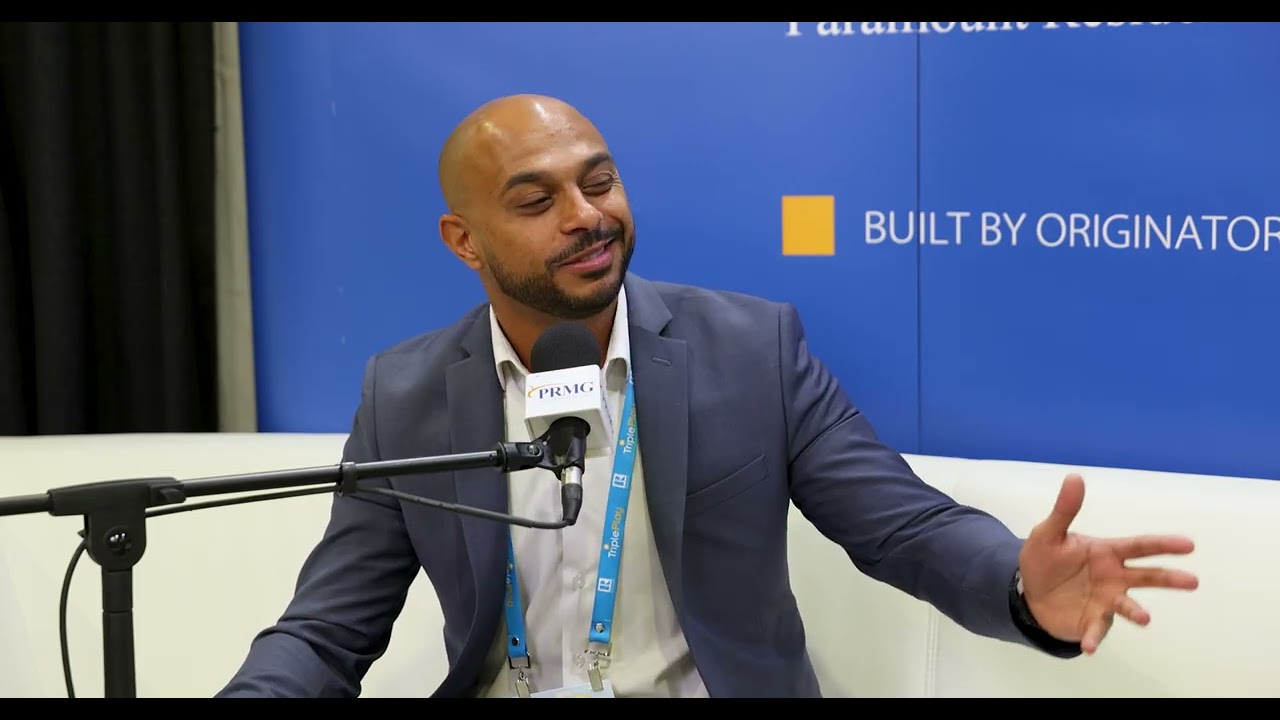
Mortgage growth depends on more than falling rates. In this Got Mortgages Podcast conversation at the 2025 Triple Play REALTOR® Convention & Trade Expo, Mina Akladious and Abdel Khawatmi connect buyer demand and home equity decisions with the operational support loan officers need to serve clients. Their outlook for 2026 is optimistic, but the more useful message is practical: understand why people need financing, compare the full financial consequences, and build a business that can execute when transactions become difficult.
Conversation originally published December 25, 2025. Recap added October 24, 2026.
Watch the original conversation on YouTube.
Key Takeaways: Demand Matters, but Execution Wins Business
The conversation identifies three connected opportunities: purchase financing driven by real household needs, equity financing for homeowners reluctant to give up an existing mortgage, and stronger service from experienced originators. The speakers describe active purchase business in their markets rather than a business plan built entirely around a future refinance wave.
Their platform discussion is equally specific. Accessible underwriters, specialized marketing teams, transparent branch financials, and direct communication with leadership are presented as reasons they value PRMG. For readers evaluating a lender or employer, the practical takeaway is to investigate how those resources work in an actual transaction—not simply whether they appear in a recruiting presentation.
Why a Gradual Rate Decline Could Be Easier on Buyers
Looking ahead from Triple Play 2025, Abdel argues that a gradual decline in mortgage rates could be healthier than a sudden drop. His reasoning centers on inventory: if financing becomes more attractive quickly while available homes remain limited, additional buyers may arrive faster than sellers. Better borrowing conditions would not automatically mean an easier home search.
He grounds that view in his experience in New Jersey and Pennsylvania, while Mina adds observations from Florida. These are local business perspectives, not proof that every housing market behaves alike. The important distinction is between an improvement in financing costs and an improvement in the balance between buyers and available properties.
For a prospective buyer, the application is to prepare before waiting for a particular rate. Establish an affordable payment range, review available cash, and understand local inventory. A lower rate can help purchasing power, but the benefit may be partly offset if competition increases. The episode’s forecast should be read as its forward-looking discussion at the event, not as a current rate report or a confirmed account of what followed.
Low Existing Rates Do Not Eliminate the Need to Move
The speakers describe a tension familiar to homeowners: keeping an attractive existing mortgage versus finding a home that fits a changing life. A growing household or a need to downsize can make a move necessary even when replacing the mortgage feels financially uncomfortable. That helps explain why purchase activity can continue without a broad rush of voluntary sellers.
Abdel also describes homeowners using a home equity line of credit to help purchase another property while retaining their existing home. In that situation, a purchase does not necessarily create a corresponding listing. It is a useful explanation for why buyer activity and tight inventory can coexist.
That observation is not a universal financing recommendation. A homeowner considering the approach needs to evaluate the existing mortgage, the HELOC payment, the proposed new mortgage, and the costs of keeping two properties. Qualification and access to equity must be established before treating borrowed funds as an available down payment. Preserving an appealing first-mortgage rate is only one part of the decision.
Cash-Out Decisions Need a Household-Level Comparison
Mina notes that some homeowners consider refinancing despite having a low existing mortgage rate because access to cash or relief from other debt matters more to them. Abdel emphasizes presenting a complete plan rather than telling a borrower only that a payment decreases or cash becomes available. Their discussion shifts attention from the mortgage rate alone to the household’s combined obligations.
A practical comparison should show the existing mortgage and other debts alongside the proposed financing. Include closing costs, the new balance, repayment term, monthly obligations, and expected interest costs. Compare a cash-out refinance with retaining the first mortgage and using a separate equity loan or line when those alternatives are available and appropriate.
Monthly relief and long-term savings are not interchangeable. Extending repayment can reduce a payment while increasing total interest, and consolidating unsecured debt into a mortgage puts the home behind that debt. A borrower also needs a plan to avoid rebuilding the balances that were paid off. The episode’s strongest educational point is the need for a visible, understandable comparison rather than a decision based on one attractive number.
Purchase Relationships Offer a Base Beyond Refinance Cycles
Abdel describes his business as heavily purchase-oriented, and Mina reports substantial purchase activity alongside emerging refinance opportunities. Their optimism is therefore not based solely on waiting for rates to unlock a new pool of refinance candidates. It rests partly on continuing to serve buyers and the real estate professionals working with them.
The speakers also believe a smaller field of active mortgage professionals creates opportunities for experienced originators. That is their interpretation of industry conditions, not a promise of automatic market-share gains. Fewer competitors do not replace the need for consistent communication, product knowledge, or dependable closings.
For an originator, the useful planning exercise is to separate opportunity from readiness. Which agents already trust the team? Where do transactions stall? Which borrower questions need clearer explanations? A purchase-focused business can strengthen those areas regardless of whether a rate-driven surge arrives. Equity and refinance conversations then become additional services rather than the entire growth strategy.
Operations Are the Infrastructure Behind a Strong Referral
A distinctive feature of the Triple Play discussion is how often the speakers return to operations. Abdel identifies PRMG as a retail, wholesale, and correspondent lender, then directs attention to the people supporting files behind the scenes. He credits operations and underwriting colleagues with helping resolve difficult transactions.
Their examples of unusually fast rescues illustrate why they value that support, but they should not become standard closing expectations. A troubled transaction still depends on documentation, eligibility, appraisal requirements, title work, and other conditions. The transferable lesson is the value of an accessible team that can identify the obstacle and communicate a realistic path forward.
An originator evaluating a platform should ask who handles escalation, how underwriting questions are addressed, and how unresolved conditions are communicated to borrowers and agents. Knowing whom to call is useful; knowing what information that person needs is better. Operational relationships make a referral promise more credible when a transaction stops following the original plan.
Partnership Opportunities Need Clear Terms and Compliance Review
The conversation turns to PRMG’s real estate partnership efforts in the context of changes affecting agents after the NAR settlement. The speakers mention marketing support and potential compensation arrangements for qualifying participants, encouraging interested professionals to ask about the available structure.
They do not explain enough detail to establish eligibility, responsibilities, or permissible payment terms. The practical next step is a written explanation reviewed by the appropriate compliance professionals. Changes to real estate compensation practices do not create blanket permission to pay for mortgage referrals. Any arrangement needs to distinguish legitimate services from referral activity and address applicable requirements, including RESPA where relevant.
Agents should ask what work they would perform, how compensation or expenses would be determined, what disclosures are required, and who oversees the arrangement. A useful partnership should be understandable without relying on an informal promise of additional income.
Evaluate Marketing, Autonomy, and Culture Through Actual Practices
Abdel describes three areas of marketing support: digital marketing, performance marketing, and brand-and-culture marketing. He values being able to work with a specialized team rather than bringing every request to one general department. He also describes recurring conversations in which originators and leadership share ideas that may be useful across the organization.
The recruiting implication is concrete: ask how an idea becomes an approved campaign, who helps execute it, and what support the branch must supply. Access to marketing resources is different from having a repeatable process for using them. Technology likewise matters most when it fits the originator’s workflow and receives practical support.
Financial transparency is another major theme. Abdel values branch-level control and regular visibility into revenue and profit. A branch manager can apply that point by asking to understand reporting, allocated expenses, and decision authority before joining a platform.
The speakers describe company culture through leadership accessibility, trust, and personal support. Their two-part Triple Play event plans reinforce that emphasis: a private gathering recognizes operations colleagues and trusted partners, while the broader celebration builds community. For a distributed business, meeting the people behind emails and loan conditions can strengthen working relationships. It is the connection between celebration and everyday collaboration—not the size of the party—that makes the event relevant to business growth.
Final Checklist: Turn the Conversation Into Better Decisions
For buyers: review affordability and financing readiness before making a particular interest rate your only trigger. Discuss local competition with your agent and establish a payment ceiling that still leaves room for ownership costs.
For homeowners: compare keeping the existing mortgage, adding equity financing, refinancing, and selling where relevant. Put payments, costs, terms, and the risks of retaining another property into the same decision framework.
For loan officers and branch managers: examine your purchase relationships, escalation process, marketing support, and financial reporting. Ask for concrete workflows and written terms rather than relying only on compensation or culture claims.
For real estate partners: request clear program requirements and compliance review before agreeing to marketing or compensation arrangements. After an event such as Triple Play, follow up with the colleagues and partners who can help deliver better service—not just with a larger contact list.
Frequently asked questions
Why does Abdel favor a gradual mortgage-rate decline in this discussion?
He argues that a sharp decline could bring more buyers into markets where housing supply is already limited. A gradual decline could allow demand to build less abruptly. His point is about the interaction of rates and inventory, not a prediction that lower rates always produce higher home prices.
How can homeowners buying another property keep inventory tight?
Abdel describes some homeowners retaining their existing property and borrowing against its equity to help buy the next one. That creates a purchase without necessarily adding a home for sale. Whether the strategy is workable depends on qualification, available equity, carrying costs, and the household’s ability to manage the combined obligations.
Does a HELOC replace the existing first mortgage?
A HELOC can provide separate borrowing against home equity without replacing the first mortgage. That is why it comes up in the discussion of homeowners who want to retain their existing rate. It still adds debt and a payment obligation, and its terms must be evaluated alongside the first mortgage and any new property financing.
What should a cash-out refinance comparison include?
Show the current mortgage and debts beside the proposed loan, including balances, closing costs, payments, repayment terms, and interest costs. Compare available alternatives as well. A lower combined monthly payment does not by itself establish lower total costs, particularly when debts are stretched over a longer term.
What should a loan officer ask about underwriting support before changing companies?
Ask how underwriting questions are submitted, who handles urgent escalations, and how the team communicates unresolved conditions. Request a realistic explanation of how a difficult purchase file is handled. An exceptional rescue example is less useful than understanding the normal process and its limitations.
Which marketing resources does Abdel describe at PRMG?
He describes digital marketing, performance marketing, and brand-and-culture marketing support. He also discusses standing meetings with the digital team and sharing ideas across leadership and originators. A prospective hire should clarify access, responsibilities, approval procedures, and any branch-level costs.
What should an agent clarify about the real estate partnership programs discussed?
Request written eligibility rules, required services, compensation or expense terms, disclosures, and compliance oversight. The episode does not provide a complete program structure. Any arrangement must be evaluated under applicable requirements; the discussion should not be interpreted as permission to receive payment for mortgage referrals.
Why did the private Triple Play event focus on operations colleagues?
The speakers describe operations as central to the borrower and originator experience. The private event gave colleagues and trusted partners a chance to connect beyond virtual communication. Its business value lies in strengthening relationships with the people who help move transactions through underwriting and closing.
To talk with PRMG Got Mortgages, call 973-536-0276, visit GotMortgages.com, contact the team or build your mortgage plan.
Explore more Got Mortgages Insights and Abdel Khawatmi’s profile. Explore more conversations at the Got Mortgages Podcast website.
Author: Abdel Khawatmi with PRMG Got Mortgages | 973-536-0276
This article is general mortgage information only. It is not a commitment to lend, a rate quote, or legal or tax advice. Loan approval, terms and pricing depend on a full application, credit review and property details, and market conditions change. Talk with a licensed loan officer and your own legal or tax professional about your situation. NMLS #1712023 | PRMG NMLS #75243.