
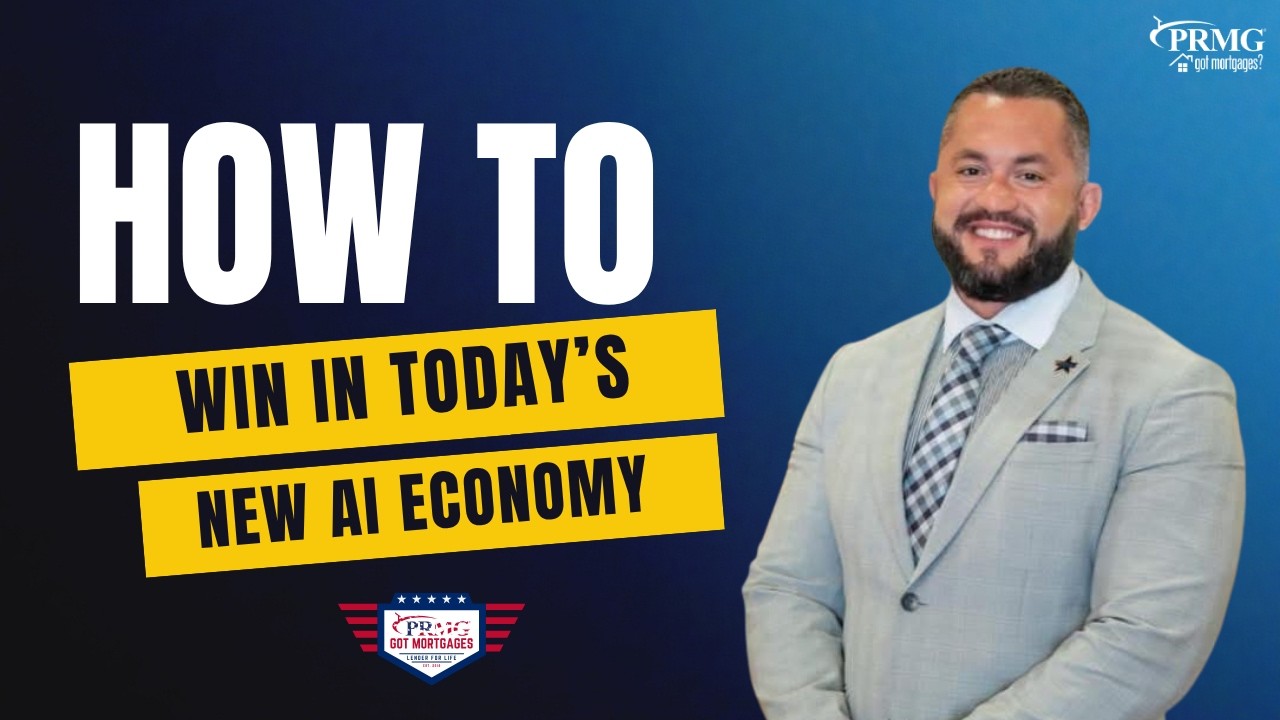
Local business discovery starts with a clear identity, accurate local profiles and useful answers—not a larger collection of AI tools. That was the practical thread of the Greater Ocean chamber presentation, publicly released April 30, 2026. For businesses serving Monmouth and Ocean counties, the opportunity is to make the same business recognizable across search, social platforms and AI-assisted research. This Got Mortgages Insights recap turns the presentation’s SEO, AEO and GEO discussion into a manageable 90-day plan, with customer clarity—not promised rankings—as the goal.
Original video publication 2026-04-30. Archive recap added October 24, 2026.
Watch the original conversation.
1. Key takeaways: become easier to find and understand
The key takeaways are to standardize your public identity, maintain your local profile, answer actual customer questions and assign responsibility for follow-up. Then reuse useful content across appropriate channels. A business does not need to replicate the presentation’s publishing volume or technology setup to apply those principles; it needs a sustainable routine.
2. SEO, AEO and GEO serve related discovery needs
The presentation used a simple distinction: SEO concerns search, AEO concerns answering and GEO concerns being found through AI. It explicitly described AEO as answer engine optimization. These are useful planning lenses, not three independent systems that guarantee visibility.
For a local business, the questions are practical. Can someone find your service and location? Does your page answer the question they asked? Does your public presence clearly establish who you are and what you do? Practical suggestion: evaluate one important service page against all three questions before commissioning more content. Better clarity on an existing page may be more useful than another thin article.
3. Give your business one recognizable public identity
Consistency was one of the presentation’s strongest themes, extending from logos and colors to names, titles, email addresses, phone numbers and locations. Switching casually among professional titles can leave visitors uncertain about whether they have found the same person or service.
Practical suggestion: create a reference sheet containing your approved business name, public contact details, accurate address or service area, preferred professional title and short service description. Compare it with your website, local listing and social profiles. Keep legitimate differences between branches, individuals and business entities clear. Consistency should clarify the truth, not flatten distinct locations into an inaccurate single identity.
4. Treat your local profile as a working customer resource
The presentation placed strong emphasis on the Google My Business profile, now commonly called Google Business Profile. Weekly photos and responses to reviews were discussed as routine maintenance rather than occasional marketing projects.
The restaurant example made the point tangible: customers examine pictures, menus, services and reviews before deciding where to go. A local professional should consider the equivalent information customers need before calling. Practical suggestion: check contact information, hours, services, website links and location accuracy, then add relevant public-facing photos. Follow the platform’s current eligibility and verification requirements. The speaker’s account of address-related verification difficulties was a reminder that even small location changes can require attention—not a universal verification procedure.
5. Request honest reviews without creating pressure
In the mortgage example, review requests happened at clear-to-close rather than after closing, when customers might already be occupied with moving. The transferable insight is timing: ask when someone has meaningful experience to describe and enough attention to respond.
Practical suggestion: choose an appropriate service milestone and make a polite, optional request for an honest review. Avoid incentives, pressure or requests limited to customers expected to be positive. Respond professionally without revealing transaction details. A review response can demonstrate attentiveness, but it should never confirm private borrower information or turn a public comment into a discussion of someone’s finances.
6. Write the answer before the sales pitch
The speaker’s AEO guidance was unusually actionable: the first sentence should answer the question. That principle also applied to profile introductions, where explaining whom the business helps was prioritized over leading with accolades.
The mortgage introduction supplied an evergreen example: FHA loans are not restricted to first-time homebuyers. An answer-led page could start with that correction, then explain that eligibility and occupancy requirements still apply. It should not imply that every applicant qualifies.
Practical suggestion: collect 20 recurring, non-identifying customer questions. Give each a direct answer, the necessary conditions and a useful next step. In regulated industries, accuracy and appropriate qualifications matter more than producing a short answer at any cost.
7. Make local content useful beyond the place name
Point Pleasant, Monmouth County and Toms River appeared throughout the discussion as examples of geographically specific discovery. The speaker also described a social question about buying a home in Monmouth County that directed readers toward a fuller website article.
Practical suggestion: connect location with a real decision. A mortgage business might explain what buyers should prepare before a financing conversation; a pest-control business might explain how to prepare for an inspection in its actual service area. Avoid manufacturing local expertise by inserting town names into interchangeable pages. Useful local content identifies the audience, answers a relevant question and states the boundaries of the service.
8. Repurpose one strong explanation into several formats
The presentation described turning a blog into video, a short social post or a podcast snippet. It also discussed a Toms River podcast and collaborative social posting as ways to introduce businesses to overlapping audiences.
The practical lesson is reuse, not indiscriminate duplication. Start with one accurate public explanation, then adapt its length, opening and presentation for each channel while preserving the underlying facts. Keep links and calls to action useful to readers.
NotebookLM and other tools were discussed as content-production aids at the time of the presentation. Those descriptions are not guarantees of present-day features, access or results. Use public or purpose-written educational material, not borrower documents or private conversations, for this workflow.
9. Use structure and AI assistance without making technical promises
The talk connected clear structure, FAQs and consistent identity with discoverability. It also mentioned schema markup. These ideas deserve separate treatment: consistent branding is an editorial discipline, while structured data is a technical implementation that should accurately represent visible page content.
Practical suggestion: use descriptive headings, direct answers and clear authorship first. Ask a qualified website professional whether appropriate structured data is correctly implemented. Neither FAQ formatting nor markup guarantees an AI citation or enhanced search appearance.
For AI-assisted drafting, the speaker emphasized role, task and context. A safe brief can specify the audience, approved public facts, desired format and prohibited claims. A knowledgeable person should review the result before publication.
10. Pair discovery with dependable response
The presentation repeatedly returned to speed: website loading, answering the phone and following up with inquiries. A business can publish excellent educational material and still frustrate someone who cannot reach a responsible person.
Practical suggestion: test the customer journey on a phone. Open a service page, find the contact option and check whether the next step is understandable. Assign an owner to incoming inquiries and set realistic response expectations. Where permitted and appropriate, an acknowledgment can confirm receipt without pretending that a person has already evaluated the request. Follow applicable communication requirements and honor opt-outs. More follow-up is not automatically better follow-up.
11. A practical 90-day implementation checklist
Days 1–30: establish the baseline. Search your business name and several service-plus-location questions. Record incorrect details and missing information. Standardize your public identity, review profile eligibility and accuracy, and collect 20 customer questions without personal information. Assign an owner to each correction.
Days 31–60: publish and maintain. Develop the most useful answers into a focused FAQ resource and substantive service articles. Add appropriate profile photos, respond to reviews and establish a respectful review-request routine. Test mobile navigation, contact forms and inquiry routing.
Days 61–90: reuse and evaluate. Adapt your strongest explanations into selected social or video formats. Review unanswered inquiries, recurring customer confusion and pages needing updates. Block recurring maintenance time on the calendar. This phased checklist is a practical application of the presentation’s closing plan, not a promise of results within 90 days.
12. Measure clarity and qualified interest, not just visibility
The speaker encouraged businesses to search for themselves across search and AI tools. Treat those checks as snapshots: responses can vary by query, platform, location and time. One appearance—or absence—does not establish overall market visibility.
Practical suggestion: track corrected profile errors, completed content updates, relevant website inquiries, response times and questions customers still ask after reading your pages. Review the same set of service-and-location queries periodically, but do not make rankings the only measure. The durable goal is a public presence that helps the right customer recognize your business, understand the service and take an informed next step.
Frequently asked questions
What should a local business fix first if its online presence is inconsistent?
Start with factual identity and contact information. Confirm the correct business name, public phone number, website, hours and accurate location or service area. Update the website and primary local profile, then work through social accounts and relevant directories. Document legitimate branch differences rather than forcing every listing to look identical.
How should a business divide its attention among SEO, AEO and GEO?
Begin with work that helps across discovery channels: accurate profiles, useful service pages and direct answers to customer questions. Use the presentation’s distinctions to identify gaps, not to create three separate content factories. Search visibility, answer usefulness and AI discovery can overlap, but none substitutes for a trustworthy customer experience.
What makes a customer FAQ substantive enough to publish?
A useful FAQ resolves a specific decision or misunderstanding. Answer immediately, explain important conditions and identify a sensible next step. For example, clarify that FHA loans are not exclusively for first-time buyers, then note that other eligibility and occupancy requirements apply. Avoid unsupported promises or answers that merely tell readers to call.
Does a Google Business Profile replace a business website?
No. The presentation emphasized the profile as a priority, but it also relied on website articles for fuller explanations. A profile helps visitors check essential business information; a website provides room for detailed services, educational content and contact options. Maintain both consistently, subject to current platform eligibility and your organization’s policies.
How can a small team repurpose content without publishing misleading duplicates?
Create one reviewed source article using approved public information. Turn its main answer into a short post, its explanation into a video outline and its supporting questions into future topics. Adapt the format without changing qualifications or factual meaning. Recheck time-sensitive claims before reuse, and choose a cadence the team can maintain.
Should customer calls or borrower documents be uploaded to AI to generate marketing content?
No. This implementation plan does not recommend uploading private conversations, tax returns, pay stubs, identification or other borrower data. Develop general educational examples independently from approved public facts. Permission to record a conversation should not be treated as permission for unrelated AI processing or public marketing use.
How can a business check whether AI tools recognize it accurately?
Test several realistic questions about the business and its services in the places it actually serves. Note whether the name, location and service description are accurate, then correct the public information you control. Repeat checks periodically. AI responses vary, so a single result is diagnostic feedback, not proof of permanent visibility.
What is a realistic outcome for the first 90 days?
Aim for accurate core profiles, a documented public identity, a useful FAQ resource, several strong explanations and a reliable inquiry-response routine. Those are concrete improvements a team can control. Track qualified interest and customer confusion alongside activity. Do not treat a 90-day plan as a guaranteed ranking, citation or revenue deadline.
To talk with PRMG Got Mortgages, call 973-536-0276, visit GotMortgages.com, contact the team or build your mortgage plan.
Explore more Got Mortgages Insights and Abdel Khawatmi’s profile.
Author: Abdel Khawatmi with PRMG Got Mortgages | 201-679-0422
This article is general mortgage information only. It is not a commitment to lend, a rate quote, or legal or tax advice. Loan approval, terms and pricing depend on a full application, credit review and property details, and market conditions change. Talk with a licensed loan officer and your own legal or tax professional about your situation. NMLS #1712023 | PRMG NMLS #75243.