
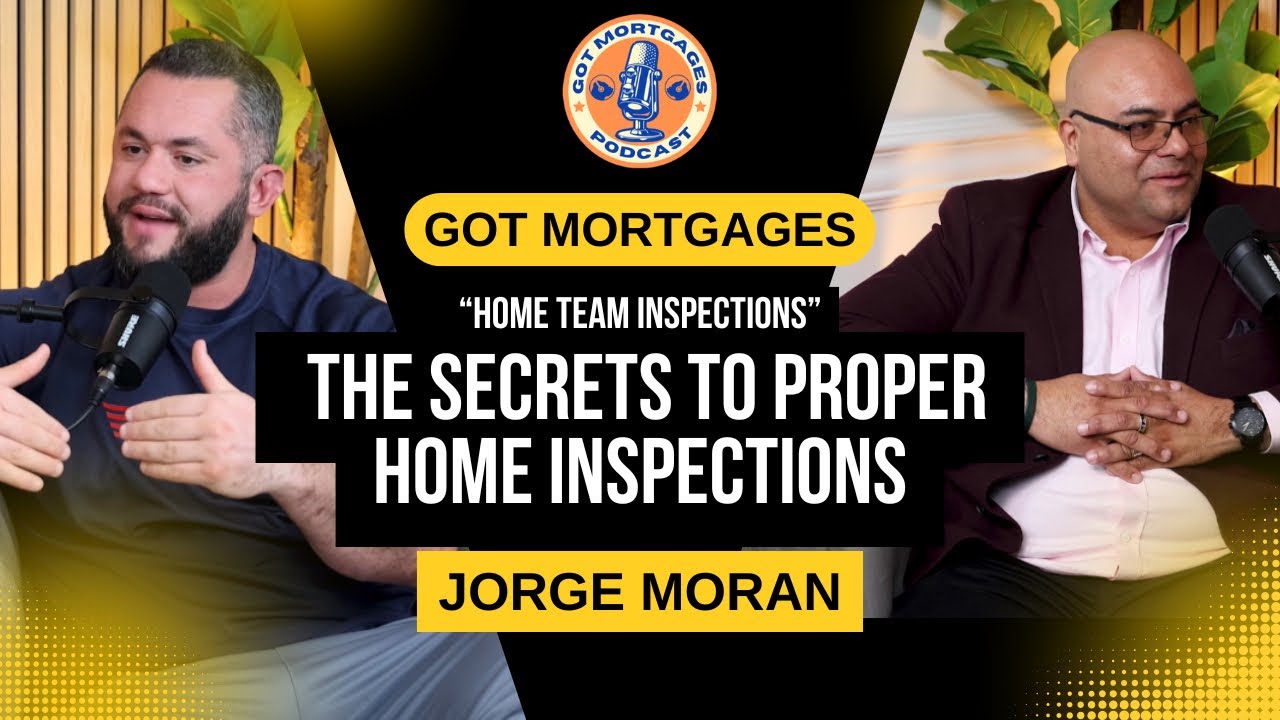
A useful home inspection does more than identify problems: it helps people understand what they are buying, what needs further attention, and what to do next. On the Got Mortgages Podcast, Abdel Khawatmi speaks with George Moran, owner of HomeTeam Inspection Service of Monmouth County, about that responsibility and the business behind it. George connects his construction upbringing in Peru, immigration to the United States at 19, and corporate operations experience to an inspection practice built around explanation. His most practical advice for sellers is to investigate property concerns before a buyer’s inspection puts them under deadline pressure. For business owners, his message is equally direct: relationships, communication, and a capable team matter as much as technical skill.
Conversation originally published February 25, 2026. Recap added October 24, 2026.
Watch the original conversation on YouTube.
Key Takeaways: Preparation, Explanation, and Capacity
George’s inspection philosophy rests on making findings understandable. His construction background helps him notice conditions that a homeowner may overlook, while his teaching experience helps him explain those observations. For a buyer, the value is not simply receiving a report. It is being able to ask informed questions about the property and decide which concerns require another professional’s attention.
Sellers get a different but related lesson: familiarity can make a problem almost invisible. George recommends considering an inspection before listing, including when a move is still a year away. Earlier information can create room to plan repairs rather than address everything during a negotiation.
The business lessons reinforce the same emphasis on preparation. George uses slower periods to strengthen relationships, sees technology as a potential aid to documentation, and recognizes that an owner’s physical availability eventually limits growth. His next step is not merely working harder; it is building a team that can carry his approach into more homes.
From Peru to Ownership: Experience That Found a New Purpose
George arrived in the United States from Peru at 19, initially expecting to work, save money, and eventually return. Instead, he became the primary income earner for a family of five and worked three jobs to help support them. His account presents entrepreneurship as a later chapter in a long working life, not an immediate leap from arrival to ownership.
Construction remained a thread throughout that journey. His father owned a construction company, and working together exposed George to practical building knowledge even when they disagreed about how to do things. He later earned a master’s degree and spent 28 years in corporate America, eventually working as a director of operations.
Those experiences came together in home inspections: familiarity with buildings, comfort explaining information, and experience running operations. For someone considering a career change, the useful application is to inventory transferable skills before choosing a business. George did not need every previous role to resemble inspection work for that experience to become relevant.
Why Clear Explanations Belong at the Center of an Inspection
Abdel observes that George notices building details other people might never look at until a larger problem develops. George pairs that observational ability with a teaching background. He describes knowing how to take someone through an explanation in terms they can understand, rather than simply naming a condition and moving on.
That distinction matters because a finding and a decision are not the same thing. A buyer may understand that an inspector noticed a concern without understanding its location, implications, or appropriate next step. A practical application of George’s approach is to ask the inspector to connect each significant observation to the relevant report entry and explain whether further evaluation is recommended.
George also emphasizes communicating with Spanish-speaking clients whose vocabulary and expressions can differ across countries and communities. The lesson is more specific than offering a language option. An inspector needs to check that the explanation actually lands. Buyers should discuss language preferences when booking and ask how questions will be handled during the walkthrough and after the report arrives.
Pre-Listing Inspections Give Sellers More Time to Respond
George’s closing recommendation is for homeowners to consider an inspection before putting their property on the market. His reasoning begins with a familiar habit: when people walk past the same condition repeatedly, they can stop noticing it. An outside professional brings a fresh perspective to the house and may identify concerns the owner has mentally absorbed into everyday life.
Timing is central to his advice. A seller who learns about a condition well before listing has more opportunity to investigate it, seek repair estimates, and organize the work. If the same concern first appears during a buyer’s inspection, the discussion may occur against transaction deadlines. George argues that an apparently modest issue can become a much more difficult negotiation when it surfaces late.
For a homeowner planning a move next year, the practical step is to build a preparation schedule now. Discuss inspection timing with the listing team, identify which findings warrant qualified evaluation, and keep documentation of completed work. A pre-listing inspection does not replace a buyer’s independent evaluation, and sellers should discuss applicable disclosure responsibilities with their agent or attorney.
Inspection Technology Should Support Attention, Not Replace It
George is enthusiastic about a possible shift toward glasses-based inspection documentation. He describes a workflow in which an inspector could capture images, speak observations while moving through a property, and edit the resulting report afterward. His example centers on recording both a concern and its precise location, rather than relying solely on a phone and separate notes.
The conversation presents this as an emerging direction, not a confirmed feature available on every inspection. Its practical appeal is easy to understand: documentation happens while the inspector is looking at the condition. Abdel also sees potential for reducing the distraction of note-taking and giving the professional more room to communicate with the client.
The important operational question is what happens after capture. Spoken notes still need review for accuracy, context, and location before they become a client-facing explanation. George specifically includes editing in the workflow he describes. For an inspection business evaluating new tools, a sensible test is whether the technology improves the clarity of the final report without weakening the professional’s review.
A Slower Calendar Can Become Relationship-Building Time
At the start of the conversation, George describes business as slower than usual and immediately redirects the discussion toward relationships. If he is not performing inspections, he believes he should be meeting people and reinforcing existing connections. That response is more actionable than waiting for market activity to change.
The setting supports the point: George and Abdel had just participated in a mastermind together. George says those sessions expose him to ideas he can apply gradually, including ideas involving AI and marketing. He does not describe adopting every tool at once. Instead, he sees progress as the accumulation of useful changes over time.
For a service business, this suggests giving quieter weeks a defined purpose. Reconnect with referral partners, explain how clients can prepare for an inspection, and identify recurring questions that deserve clearer answers. Keep those conversations useful rather than treating every contact as a request for business. George’s comments about his own activity are personal observations, not evidence of conditions across the entire New Jersey market.
Serving a Broad Community Requires a Deliberate Team Plan
George would prefer to concentrate his work geographically, but his Spanish-speaking clients buy homes across New Jersey. That creates a tension between a local operating preference and a customer community that is not confined to one area. His proposed answer is to build a team that can cover different locations while maintaining a consistent client experience.
He explains that reaching his business goal also revealed a ceiling. An inspection requires someone to be physically present at the property, and there are only so many places one owner can be. More online availability cannot remove that fieldwork constraint. Growth therefore becomes a staffing and service-design question, not just a marketing question.
George wants people with the right personality who can reproduce his way of working. He imagines remaining involved in explaining findings and following up with clients even when another inspector handles the visit. A practical next step would be to define those handoffs explicitly: who performs the inspection, who reviews questions, and how the client reaches the right person afterward.
Corporate Experience and a Franchise Provided a Starting Structure
George’s move into business ownership followed frustration with corporate leadership changes and the possibility that new decision-makers would replace established priorities. Before choosing inspections, he considered a customer-facing role connected to a nursing home, then recognized that it would pull him back toward the corporate environment he wanted to leave.
Home inspections offered a closer connection to work he already enjoyed. He chose a franchise because he wanted an established foundation rather than creating every element of a business from scratch. He says the franchise recognized the relevance of his corporate background. The episode does not detail the agreement, costs, or specific operating support.
The distinction for prospective owners is between choosing a familiar field and choosing a workable operating model. George did both. Someone evaluating a similar transition should separately examine personal fit, required qualifications, financial commitments, and the support actually included in a franchise arrangement. An existing framework can provide a starting point, but the owner still has to develop local relationships and deliver the service.
Start Building Visibility Before the Business Needs It
Asked what he would change about his early entrepreneurial years, George points to marketing. He wishes he had been more outgoing, understood social media sooner, and already had a platform to build on when he launched. He describes spending money learning a process he had underestimated.
Abdel sharpens the distinction between studying marketing and actually doing it. George agrees that an existing presence would have given him a stronger starting position. Later adoption of AI and participation in the mastermind show his willingness to learn, but neither replaces the basic work of becoming visible and explaining why clients should understand his approach.
For an inspector, a useful application is to publish clear educational material: what happens during a walkthrough, how clients can ask about findings, and why sellers might investigate concerns early. That content can demonstrate communication style without exposing client details. The objective is not simply posting more often; it is helping prospective clients understand the service before they need to book it.
Final Checklist: Turn the Conversation Into a Practical Plan
If you are buying, ask how the inspector explains significant findings, accommodates your language preference, and handles questions after delivery. Confirm the inspection scope and report timing before booking. When a concern needs further evaluation, ask what type of qualified professional should review it rather than assuming the inspection alone answers every question.
If you are selling, discuss a pre-listing inspection with your real estate team early enough to act on the results. Separate investigation, estimates, and completed repairs in your planning. Keep records, clarify disclosure obligations, and leave room for a buyer to conduct an independent inspection.
If you run a service business, identify whether your next constraint is visibility, relationships, documentation, or field capacity. Choose one improvement and give it a clear owner. George’s larger goal is a business that supports both service and personal freedom. A plan that adds appointments without preserving time for family or maintaining clear client communication would miss an important part of his definition of success.
Frequently asked questions
Why consider a home inspection a year before selling?
George recommends starting early because advance notice gives sellers time to investigate concerns, obtain estimates, and spread out preparation. The useful timing depends on your listing plans, so discuss it with your real estate team rather than assuming every seller needs the same schedule.
Does a pre-listing inspection replace the buyer’s inspection?
No. It helps a seller prepare, but a buyer may still arrange an independent inspection. Sellers should also discuss how findings and repairs affect applicable disclosure responsibilities with their agent or attorney.
What should I ask when an inspection finding is unclear?
Ask where the condition is located, which report entry describes it, what the inspector observed, and whether another professional should evaluate it. Request a plain-language explanation of the next step rather than guessing from a technical label.
How can Spanish-speaking buyers prepare for an inspection?
Discuss your preferred language before booking and confirm who will explain the findings. Ask whether follow-up questions can be handled in that language. George emphasizes that vocabulary varies across Spanish-speaking communities, so understanding matters more than simply labeling a service bilingual.
Are smart glasses already part of every HomeTeam inspection?
The episode does not establish that. George describes glasses-based image capture and spoken documentation as an emerging direction. Ask the inspection provider which tools it currently uses and how the resulting report is reviewed.
What tells an inspection business owner it may be time to hire?
George recognized the need when reaching his goal also exposed the limit of his own physical availability. If travel, site visits, and client follow-up leave no room for additional work, map those demands before adding appointments. Hiring should include standards for communication and client handoffs.
What marketing lesson does George wish he had learned earlier?
He wishes he had built a social media presence and learned to market himself before launching. His lesson is to start developing visibility, not only study marketing. Educational posts that explain the inspection process can give prospective clients a useful introduction to your approach.
Why did George choose a franchise instead of starting independently?
He wanted an established foundation rather than building every business element from scratch. The conversation does not specify franchise fees or contractual support. Prospective owners should investigate those details separately and assess how the model fits their skills, finances, and local market.
To talk with PRMG Got Mortgages, call 973-536-0276, visit GotMortgages.com, contact the team or build your mortgage plan.
Explore more Got Mortgages Insights and Abdel Khawatmi’s profile. Explore more conversations at the Got Mortgages Podcast website.
Author: Abdel Khawatmi with PRMG Got Mortgages | 973-536-0276
This article is general mortgage information only. It is not a commitment to lend, a rate quote, or legal or tax advice. Loan approval, terms and pricing depend on a full application, credit review and property details, and market conditions change. Talk with a licensed loan officer and your own legal or tax professional about your situation. NMLS #1712023 | PRMG NMLS #75243.