
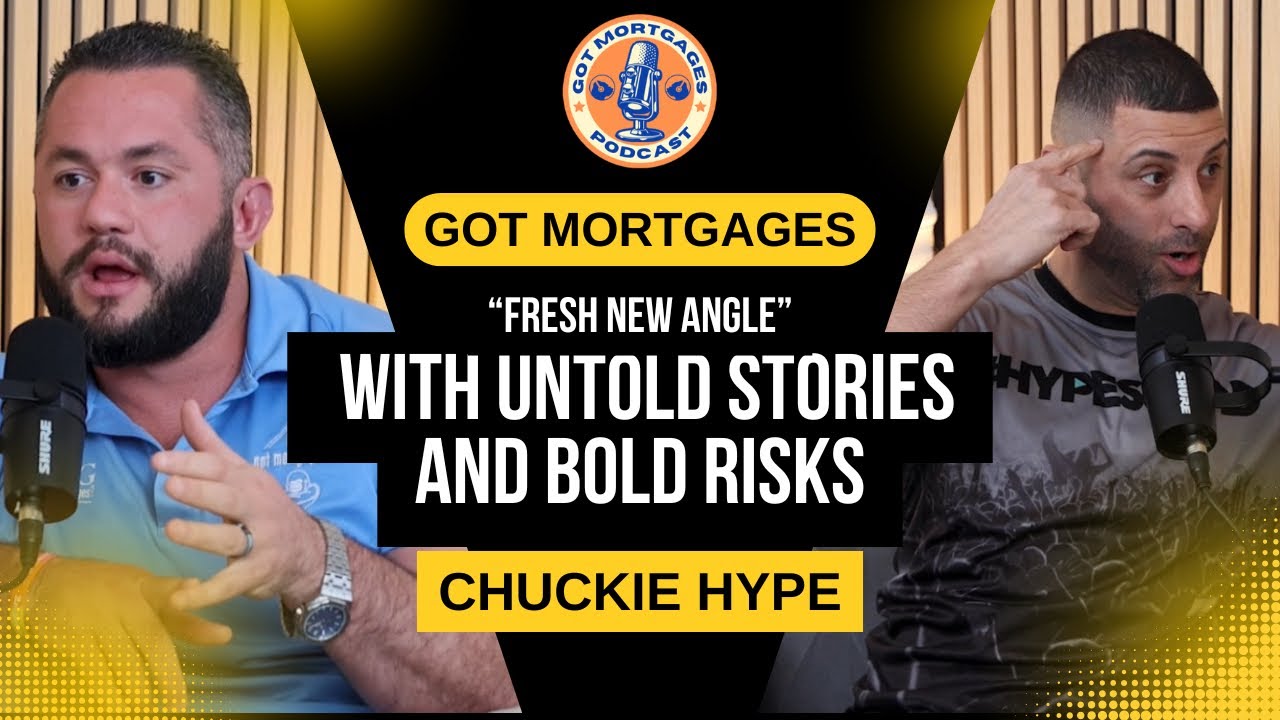
A memorable event brand needs more than visibility: it needs a clear purpose, a recognizable experience, and a team trusted to deliver it. On the Got Mortgages Podcast, Abdel Khawatmi talks with Chucky, founder of Fresh New Angle, about building those foundations in a DJ, photography, and videography business. From livestreaming during event shutdowns to stepping back from daily operations, his story shows how staying present and learning to delegate address two different challenges: keeping a brand relevant and making it less dependent on its founder.
Conversation originally published February 3, 2026. Recap added October 24, 2026.
Watch the original conversation on YouTube.
Key Takeaways: Visibility Must Connect to Delivery
Chucky describes opening Fresh New Angle in 2013 after years in the event industry, gradually turning a side business into his main occupation. The next phase is not simply about booking more events. It is about putting systems behind the business and allowing other professionals to do work the founder does not need to own.
Three lessons anchor the conversation. First, maintaining a public presence can keep a service business connected to its audience when its usual work is interrupted. Second, a mission becomes useful when it explains both the customer experience and the team's role in creating it. Third, delegation requires the owner to change habits, not merely add staff.
For mortgage professionals and other relationship-driven businesses, the relevant connection is practical: community events and creative media are extensions of the service experience. A recognizable name may attract attention, but the people delivering the experience determine what guests, clients, and partners remember.
Measure Progress Beyond a Single Year's Revenue
Reflecting on the recently concluded 2025, Chucky calls it a strong year because of what he learned and the people he met, rather than because of financial growth. He describes the financial side as steady while emphasizing relationships and a changed mindset. That distinction matters: he is identifying groundwork for future development, not presenting learning as proof of an already achieved revenue increase.
Abdel connects that perspective to his team's planning framework, PEMS: physical, emotional, mental, and spiritual considerations before finance. In this conversation, business planning includes the condition and priorities of the person leading the company, rather than treating that person as separate from its operations.
A useful application is to review financial outcomes alongside changes in business capacity. Has the owner gained a stronger management relationship, clarified responsibilities, or followed through on useful advice? Those developments do not replace financial measurement. They help explain whether a stable period has also produced better conditions for the next stage.
Use Disruption to Keep the Brand Present in a Different Format
When weddings and events stopped during COVID, Chucky moved his performance online. Encouraged by a friend, he began livestreaming DJ sessions and creating informal virtual parties. The format changed, but the underlying offer remained recognizable: energy, entertainment, and a reason for people to gather.
He describes the purpose as keeping his brand and its energy visible. That is different from claiming each broadcast immediately generated a booking. Abdel picks up on the discipline required to continue showing up when the direct return is not obvious. Their discussion separates consistent presence from instant commercial results.
The practical lesson is to preserve what people value about a service while finding a different way to demonstrate it. An event entertainer can perform remotely because performance is central to the experience. Another service business should identify its own equivalent rather than copy the format without a reason. For a mortgage educator, for example, that might mean answering recurring planning questions instead of publishing content unrelated to the service.
Chucky also describes bringing additional industry talent and business responsibilities into his company during the disruption, as well as buying out partners. He saw an opportunity to reshape the organization around his leadership style. Those moves depended on his circumstances; they are a separate operational decision from keeping the brand visible.
Treat BRAND as a Business Review, Not a Logo Exercise
Abdel organizes the branding discussion around five elements: belief, reputation, analysis, notice, and discipline. Belief concerns commitment to the business. Reputation concerns what it is known for. Analysis means examining how it operates. Notice includes being visible and paying attention to audience response. Discipline is continuing the work when motivation or immediate feedback is limited.
Fresh New Angle's shutdown response gives this framework substance. Chucky still believed in the service, continued appearing publicly, examined opportunities within the business, and adjusted his approach. Branding here is not primarily a discussion about a visual identity. It is a pattern of decisions that customers and collaborators can recognize over time.
For an owner, these categories can reveal uneven development. A company may have strong visibility but an unclear service promise, or a respected reputation but little discipline around public communication. Reviewing each element separately is more useful than responding to every growth problem with another post, new equipment, or a redesigned logo.
Make the Mission Explain Who Delivers the Experience
Chucky says he had long understood what Fresh New Angle stood for but had not clearly written it down. Refining the mission gave him a more purposeful way to introduce the company. Instead of stopping at a list of DJ, photography, and video services, he describes empowering talented professionals to capture and create new memories for the people they serve.
The emphasis on professionals is important. The mission does not make the founder the sole source of the experience. It gives photographers, videographers, and DJs a meaningful place in the company's identity. That supports his later argument that growth requires allowing those people to use their strengths.
He describes using this introduction at bridal shows, where prospective clients naturally ask what the company does. The service list explains the available work; the mission explains the intention behind it. Both are useful. Purpose should make the offering clearer, not leave a customer uncertain about what can actually be booked.
A practical step is to test a mission against a real event. Can it help determine which team members belong on the assignment, what matters most to the client, and how the experience should feel? If not, it may be memorable language without enough direction for delivery.
Let the Event Experience Demonstrate the Brand
Abdel introduces Chucky as someone who has helped with holiday parties and community events. Later, he recalls Chucky's enthusiasm while setting up a booth at a holiday party, including the attention he gave to angles and photographs. The example makes the branding discussion tangible: the host remembers how the provider engaged with the experience, not just what equipment arrived.
That does not mean enthusiasm alone substitutes for planning. Rather, the episode illustrates how a service promise becomes credible through visible care. A company that talks about creating memories has an opportunity to demonstrate that purpose in its setup, interactions, and creative decisions.
For someone arranging a mortgage-team celebration or community gathering, the practical question is how a vendor's approach fits the event's purpose. Discuss the atmosphere, the important moments to capture, and how the team will interact with guests. Those conversations are more revealing than comparing service labels alone, particularly when several providers offer similar combinations of entertainment and media.
Use Accountability to Turn Ideas Into Follow-Through
Chucky credits Books, Beans and Brotherhood with helping shift his thinking. He was initially hesitant to join, but the group's reading and accountability became valuable. The conversation references How to Win Friends and Influence People and the difference between having encountered an idea before and engaging with it again in a setting that encourages action.
Abdel makes a similar distinction between casually consuming excerpts or podcasts and committing to read and use a journal. The important mechanism is not simply access to more information. It is a structure that makes attention and follow-through less optional.
Chucky also describes drawing on advice from mentors and business peers rather than trying to invent every process himself. A useful way to apply that approach is to bring a specific operational problem to a trusted group, select one change, and return with an account of what happened. That keeps learning connected to decisions instead of becoming another activity that fills the calendar.
Delegate the Work Without Abandoning Leadership
When asked what comes next, Chucky's answer centers on letting empowered people actually do their work. He recognizes that some tasks can be handled better and more efficiently by others. His challenge is learning how to manage that transition while spending more time on relationships, visibility, and the sales process.
He gives a concrete example: visiting the office, reviewing a few matters, offering opinions, and then leaving rather than remaining involved in everything. He also describes his wife joining the business to support the management team and her encouragement as he practices stepping back. Delegation is presented as work in progress, not a fully completed transformation.
The operational implication is to distinguish between work requiring the owner's judgment and work requiring a dependable standard. An owner can remain accountable for service quality without personally making every routine decision. Clear responsibilities, agreed review points, and defined reasons to escalate an issue can support that distinction. These are practical applications of his goal, not systems he claims to have already implemented.
His motivation also reaches beyond business volume. Chucky describes faith and family as priorities shaping how he wants to lead. The broader lesson is that the owner's role should reflect a deliberate set of priorities. Otherwise, the time supposedly freed by delegation can quickly disappear into a different collection of routine tasks.
Final Checklist: Connect the Promise, the People, and the Process
Clarify the promise. Write a brief introduction that names the service and explains the experience it is intended to create. Check whether it gives team members a role, rather than making every successful outcome depend on the founder.
Choose a relevant way to stay visible. Demonstrate the part of the service people genuinely value, and decide how consistently you can deliver that demonstration. Evaluate audience response without treating every small interaction as proof of future revenue.
Review the owner's workload. Identify one recurring responsibility that a capable team member can own, establish the expected outcome, and agree on when the owner should become involved. Protect the released time for a specific priority such as sales, relationships, or family.
Add accountability and an experience review. Bring the change to a trusted peer or mentor, then revisit it after putting it into practice. For the next event, ask whether the team's behavior, creative choices, and guest interactions delivered the mission you described.
Frequently asked questions
What services does Fresh New Angle discuss in this episode?
Chucky describes Fresh New Angle as a DJ, photography, and videography business. The conversation includes weddings, corporate events, holiday parties, and community events as settings for its work.
How did Fresh New Angle stay visible when events stopped during COVID?
Chucky began livestreaming DJ sessions and hosting informal virtual parties. He used the format to keep the company's energy and presence in front of people while in-person events were interrupted.
What does Abdel's BRAND acronym stand for?
It stands for belief, reputation, analysis, notice, and discipline. Abdel uses it to discuss commitment to the business, public reputation, operational review, visibility and audience awareness, and consistent execution.
How does Fresh New Angle's mission go beyond listing services?
Chucky emphasizes empowering talented professionals to capture and create memories. That explains both the team's role and the intended client experience, while the DJ, photo, and video service list explains what the company provides.
What work does Chucky want to spend more time doing?
He identifies relationships, public-facing opportunities such as the podcast, and the sales process as areas deserving more of his attention. He wants capable team members to handle more of the operational work that does not require him.
What role did the book club play in Chucky's business development?
He credits Books, Beans and Brotherhood with helping change his mindset and strengthen accountability. The discussion highlights structured reading, renewed engagement with familiar ideas, and following through on advice rather than merely consuming information.
What should a community-event organizer ask a creative media provider?
A practical application of the episode is to ask how the provider will support the intended atmosphere, which moments should be photographed or filmed, and how its team will engage with guests. These questions connect the service package to the actual experience.
How can a small-business owner start delegating more deliberately?
Start with one recurring task that does not require the owner's judgment. Assign an owner for it, define the expected result and review points, and clarify which issues need escalation. Reserve the freed time for a named priority; this is an application of Chucky's goal of stepping back while continuing to lead.
To talk with PRMG Got Mortgages, call 973-536-0276, visit GotMortgages.com, contact the team or build your mortgage plan.
Explore more Got Mortgages Insights and Abdel Khawatmi’s profile. Explore more conversations at the Got Mortgages Podcast website.
Author: Abdel Khawatmi with PRMG Got Mortgages | 973-536-0276
This article is general mortgage information only. It is not a commitment to lend, a rate quote, or legal or tax advice. Loan approval, terms and pricing depend on a full application, credit review and property details, and market conditions change. Talk with a licensed loan officer and your own legal or tax professional about your situation. NMLS #1712023 | PRMG NMLS #75243.