
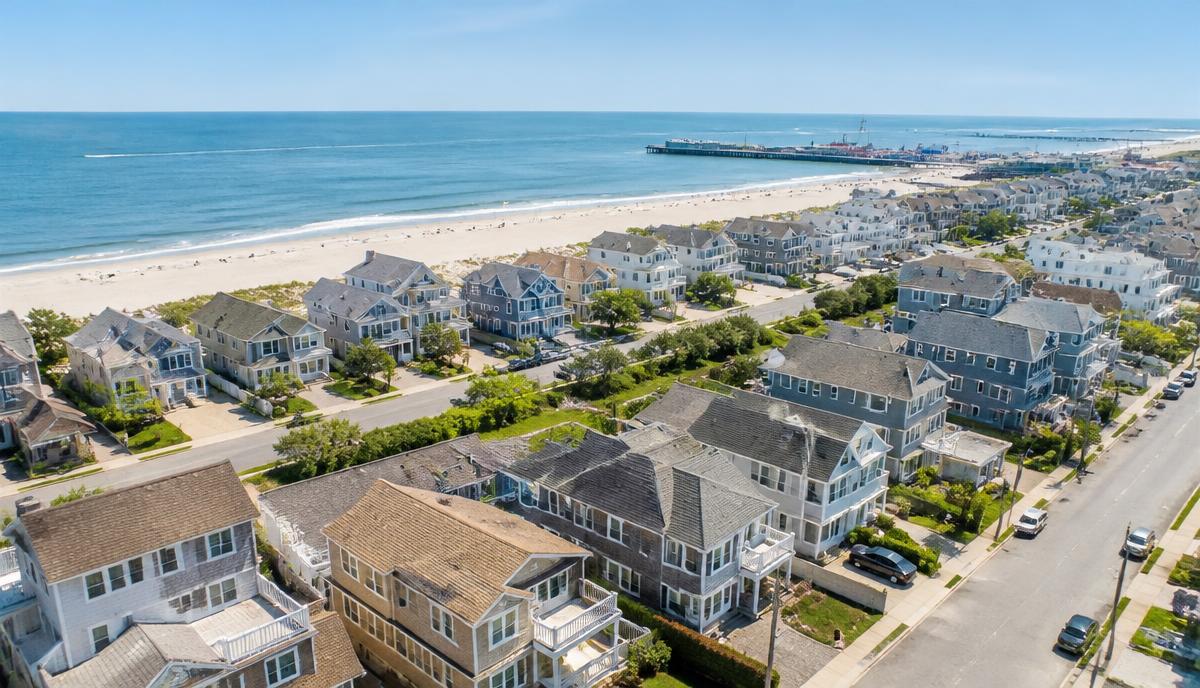
Coastal flood zone designations directly determine whether your lender mandates flood insurance on your home loan. When required, your annual flood insurance premium is divided into twelve equal parts and added directly to your monthly mortgage escrow payment. A higher-risk coastal designation increases this required insurance cost, significantly raising your total monthly housing obligation.
Understanding Coastal Flood Zones Along the Ocean County Coastline
Federal flood maps categorize land based on the calculated risk of flooding from coastal storm surges, ocean tides, and overflowing waterways. In Point Pleasant Beach and neighboring Point Pleasant, properties generally fall into three primary FEMA flood categories. Special Flood Hazard Areas include Zone VE, which represents the highest-risk coastal velocity areas subject to direct wave impact. Zone AE covers low-lying coastal and bayfront areas susceptible to rising waters and standing floods. Moderate-to-low risk areas are typically classified as Zone X.
If you finance a property located within a designated Special Flood Hazard Area using a federally backed home loan, federal law requires your lender to enforce flood insurance coverage. Whether you apply for conventional financing or government-backed mortgages, the flood map designation determines this requirement. Properties outside high-risk zones do not trigger an automatic federal mandate, giving borrowers more flexibility over their monthly expenses.
How Escrow Accounts Process Annual Flood Insurance Premiums
A mortgage escrow account functions as a holding fund managed by your loan servicer. Each month, you pay one consolidated amount that covers principal, interest, local property taxes, homeowners hazard insurance, and required flood insurance. Your servicer deposits the insurance and tax portions into your escrow account and pays the official bills on your behalf when they come due each year.
Because flood insurance policies are billed annually, the servicer divides the total annual premium across your regular monthly mortgage statements. In coastal towns across Ocean County, flood insurance premiums can represent a substantial component of total housing costs. When an annual policy carries a sizable price tag, adding that cost across twelve monthly statements creates a noticeable difference in your recurring housing expenditure.
The Escrow Difference Between Zone VE, Zone AE, and Zone X
The specific coastal designation assigned to a property determines the baseline risk tier used by insurers, which flows straight into your monthly escrow ledger. Each zone classification produces a distinct escrow impact:
Zone VE properties sit directly on the oceanfront or inlet paths where wave action is severe. Because structural damage risk is acute, insurance underwriters charge their highest risk premiums here, creating the largest monthly escrow additions for borrowers.
Zone AE properties line coastal back bays, lagoons, and riverbanks. These areas face inundation risk without high-velocity breaking waves. Premiums in Zone AE are typically lower than oceanfront velocity zones, though the exact cost depends on how high the structure sits above water levels.
Zone X properties carry minimal or moderate flood exposure. Lenders do not legally mandate flood coverage for properties in Zone X, meaning your base monthly escrow payment does not have to include a mandatory flood insurance component. Choosing to purchase optional coverage in Zone X remains significantly less expensive than in coastal high-risk zones.
How Structure Elevation Shapes Your Ongoing Monthly Payment
Under FEMA modern rating methods, flood premiums are no longer calculated solely by lines on a map. Today, policy costs depend heavily on the specific physical characteristics of the structure itself. The most influential factor in your monthly insurance cost is the foundation elevation relative to surrounding water levels.
A single-family residence elevated on pilings well above base flood elevation will secure a much lower annual rate than an older, ground-level ground-floor home on a slab within the exact same street or neighborhood. Features like proper flood vents in crawlspaces, elevated electrical panels, and raised heating equipment also help reduce risk assessments. When a property owner secures an elevation certificate demonstrating that the living area sits safely above coastal surge thresholds, the resulting annual savings translate directly into smaller monthly escrow deductions for the buyer.
Planning Your Mortgage Budget Around Coastal Property Costs
When searching for real estate in Point Pleasant Beach, calculating your budget requires looking well beyond basic principal and interest payments. An attractive purchase price can become challenging if high flood insurance premiums inflate your monthly obligations beyond your comfort zone.
To maintain strong financial balance, follow these practical steps before submitting a purchase offer:
Identify the precise flood zone boundary using official local maps during your first property review.
Request the current homeowner insurance declaration page to see their existing flood insurance policy rate.
Ask whether an active elevation certificate exists for the property, or hire a surveyor if necessary.
Consult an insurance specialist early to obtain binding quotes based on modern coastal rating criteria.
Review how the added monthly insurance payment influences your overall debt-to-income ratio for your chosen loan program.
Escrow Adjustments and Annual Servicing Reconciliations
Your monthly escrow payment is not completely static over the life of your home loan. Every year, your mortgage servicer performs an escrow analysis to ensure the funds collected match the actual bills paid for property taxes and coastal insurance. If coastal insurance rates adjust upward from one year to the next, your servicer must raise your monthly payment to cover the new annual premium.
Furthermore, if an insurance bill increases unexpectedly during the year, your escrow account can experience a shortage. The servicer will then divide that shortage across the subsequent twelve months while simultaneously increasing the regular monthly collection amount to match the higher premium. Understanding these annual review mechanics helps Ocean County homeowners prepare for natural adjustments and avoid surprises on their monthly mortgage billing statements.
Frequently asked questions
Does every home loan in Point Pleasant Beach require flood insurance?
No. Flood insurance is only mandated by mortgage lenders when the financed building sits inside a designated Special Flood Hazard Area, such as Zone AE or Zone VE. If the structure is entirely within moderate-to-low risk Zone X, your lender will not require flood insurance as a condition of loan approval.
Can private flood insurance lower my monthly escrow payment compared to NFIP policies?
Yes. Many mortgage programs accept qualified private flood insurance policies alongside the government National Flood Insurance Program. Some private insurers offer competitive pricing or tailored coverage options. If a private carrier provides a lower annual premium for the same required coverage, your monthly escrow collection drops accordingly.
What happens if FEMA changes my flood zone designation after I close my loan?
If FEMA updates local flood maps and reclassifies your property into a high-risk Special Flood Hazard Area, your mortgage servicer will notify you that coverage has become mandatory. You must purchase an acceptable policy, and the servicer will adjust your monthly escrow payment to collect the funds.
How does an escrow shortage happen when coastal insurance rates rise?
An escrow shortage occurs when the actual insurance premium billed by your insurer exceeds the funds your servicer collected over the previous year. To fix the balance, your servicer collects the deficient amount over the following year while also raising your regular monthly payment to cover the higher renewal bill.
What to do next
Navigating coastal flood zones requires careful planning before you commit to a home loan. A property that looks affordable based on principal and interest alone can stretch your budget once coastal insurance enters the escrow equation. Reviewing flood maps and obtaining early insurance quotes ensures your monthly housing payment remains stable and predictable. When you understand how flood designations work in Point Pleasant and surrounding Ocean County communities, you can make informed decisions and protect your long-term investment.
Keep reading
- Buying a home
- Point Pleasant mortgage resources
- Ocean County mortgage guide
- Second and vacation home financing
Sources
- Consumer Financial Protection Bureau - What is an escrow account?
- FEMA National Flood Insurance Program
Have questions about buying, financing or refinancing a home? Call Abdel Khawatmi and the Got Mortgages team at 973-536-0276 or visit GotMortgages.com.
Author: Abdel Khawatmi with PRMG Got Mortgages | 201-679-0422
This article is general mortgage information only. It is not a commitment to lend, a rate quote, or legal or tax advice. Loan approval, terms and pricing depend on a full application, credit review and property details, and market conditions change. Talk with a licensed loan officer and your own legal or tax professional about your situation.